

Editor's Note: This essay is an edited version of a talk the author delivered at a unity service hosted by the ministerial association of Kane, Pennsylvania.
My wife and I met in college. She was an elementary education major, and I was an English major. I played music, had long hair, and seemed pretty artsy. Surely, I would be a consistent source of good love letters and poems to keep the romance alive.
Well, I’m not. I can hit the highlights like Valentine’s Day, birthdays, and anniversaries most of the time. But I need to apologize to her for not dropping love notes in her way as often as I should. Because she deserves them—not because of something she’s done but because of who she is and what her life means to me, our family, our church, and our community.

Love letters matter because they help preserve the unity of the couple. I recently had the opportunity to represent the Center for Rural Ministry by addressing an ecumenical prayer event hosted by the ministerium of Kane, Pennsylvania. The focus of the event was unity, and pastors representing Methodist, Catholic, Presbyterian, and non-denominational traditions embodied that vision in their cooperation over the liturgy. The theme verses for the service came from Ephesians 4:
“I, therefore, the prisoner of the Lord beseech you to walk worthy of the calling with which you were called, with all lowliness and gentleness, with longsuffering, bearing with one another in love, endeavoring to keep the unity of the Spirit in the bond of peace. “
Paul is definitely not talking about the human relationship of a marriage there, but if you’ve been married, you might recognize some key ideas:
walk worthy of the calling with which you were called—our own strength can’t do it, but by the grace of God we can keep the covenant of our marriages—
with all lowliness and gentleness—humility to acknowledge our faults and the parts of ourselves that irk our spouses, acting out of care for the other to preserve his or her spirit—
with longsuffering, bearing with one another in love—recognizing that petty quarrels are just petty, the beauty of character that first drew us together remains intact—
endeavoring to keep the unity of the Spirit in the bond of peace—God is over our union; God is love and peace, and a marriage that seeks to follow God’s will ultimately reflects unity, love, and peace.
Love Letters to Small Places and the Churches that Serve Them
What do love letters have to do with Christian unity or the CRM? As a layperson and witness to a number of congregations over my lifetime, I’ve seen different approaches to dealing with challenges to Christian unity. And in my work with the CRM, I support our vision to connect college, church, and community for the flourishing of God’s ministers and congregations and the communities they serve. The CRM is multidenominational in reach. Whatever the individual convictions of pastors, congregations, or CRM staff, our intention has been to meet around the key needs of our context: that Jesus continue to be proclaimed as Lord and Savior in the rural areas and small towns of our region and that pastors and churches are encouraged in those efforts.
I have come to think of the various programs we run through the CRM as love letters.
They are love letters to small places, the harried and slow, the old and young, the charismatic and quiet—the multitude of expressions that make up the kingdom of God. Our prayer is for Christians in this region to continue to grow to be like Christ in churches that proclaim his good news.
This takes work. We know that a wide variety of burdens weigh on pastors and congregational leaders. And we know burdens are best borne when shared. We need partners. While it can be easy to put up barriers to partnership because of difference, on our good days, we instead see the world as lovers.
Let’s read again from Ephesians 4: “I, therefore, the prisoner of the Lord beseech you to walk worthy of the calling with which you were called, with all lowliness and gentleness, with longsuffering, bearing with one another in love, endeavoring to keep the unity of the Spirit in the bond of peace. There is one body and one Spirit, just as you were called in one hope of your calling; one Lord, one faith, one baptism; one God and Father of all, who is above all, and through all, and in you all.”
I can’t address the history of denominational schism, and I believe that churches can go in unhealthy directions. But when partners can affirm the unity of our one hope and one Lord, expressed in us all, we have that firm foundation as a starting point. To an extent, Scripture affirms the need for unity through difference:
Ephesians 4:7, 11-16 says, “But to each one of us grace was given according to the measure of Christ’s gift…And He Himself gave some to be apostles, some prophets, some evangelists, and some pastors and teachers, for the equipping of the saints for the work of ministry, for the edifying of the body of Christ, till we all come to the unity of the faith and of the knowledge of the Son of God, to a perfect man, to the measure of the stature of the fullness of Christ; that we should no longer be children, tossed to and fro and carried about with every wind of doctrine, by the trickery of men, in the cunning craftiness of deceitful plotting, but, speaking the truth in love, may grow up in all things into Him who is the head—Christ—from whom the whole body, joined and knit together by what every joint supplies , according to the effective working by which every part does its share, causes growth of the body for the edifying of itself in love.”
In God’s wisdom, individuals in a congregation add a unique function and perspective to add to the overall health of the body. And single congregations in a community speak to needs in ways that are unique from other congregations but that harmonize around drawing us all to the unity of the faith and of the knowledge of the Son of God. But the imagery in these verses reminds us that this is a slow process and not a straight path. A body part that is healthy today may not be tomorrow. We are not promised that an individual, a congregation, or a community will change with one great event, a six-week sermon series, or a faithful pastor’s lifetime. A longstanding elder may betray your trust, may cause division, may question your commitment to the gospel. I’ve seen it. So we “grow;” we “knit.” To be a lover is to labor for the benefit of the beloved. And lovers labor indefinitely.
Labors of Love
If the CRM labors over love letters to the churches in our region to unify our efforts for Christ, what does that look like? We plan events and programs to address different needs and areas of service within a church—preaching, children and youth education, special needs, or accounting. We want the whole body working in unity. We want pastors to have spaces to talk to each other with a veteran pastoral shepherd to guide them because only pastors and their families really understand what pastors and their families go through.
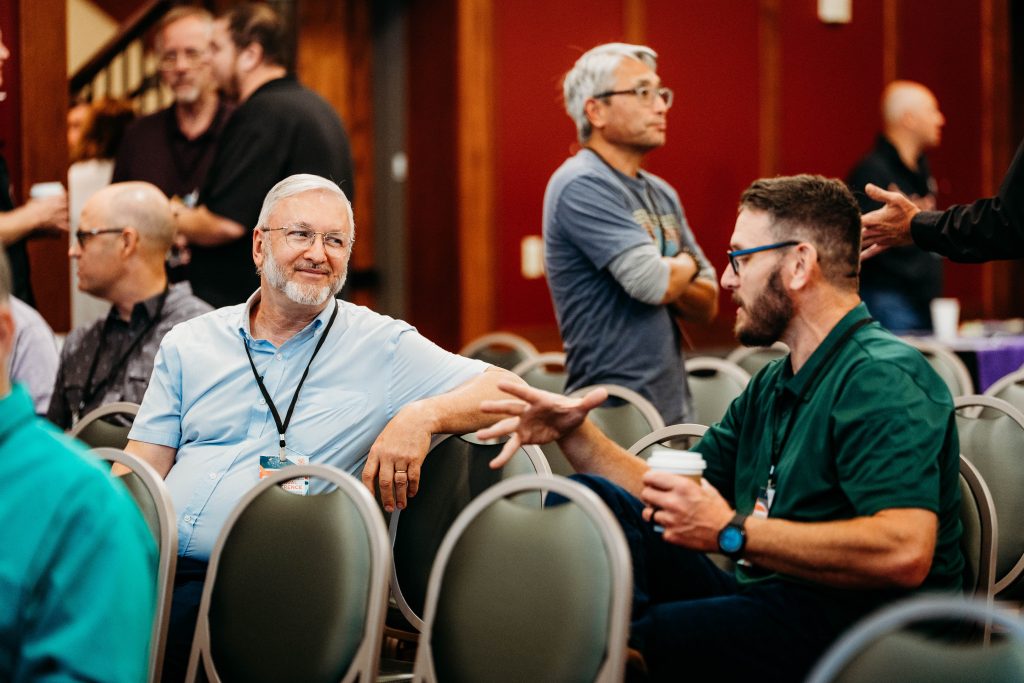
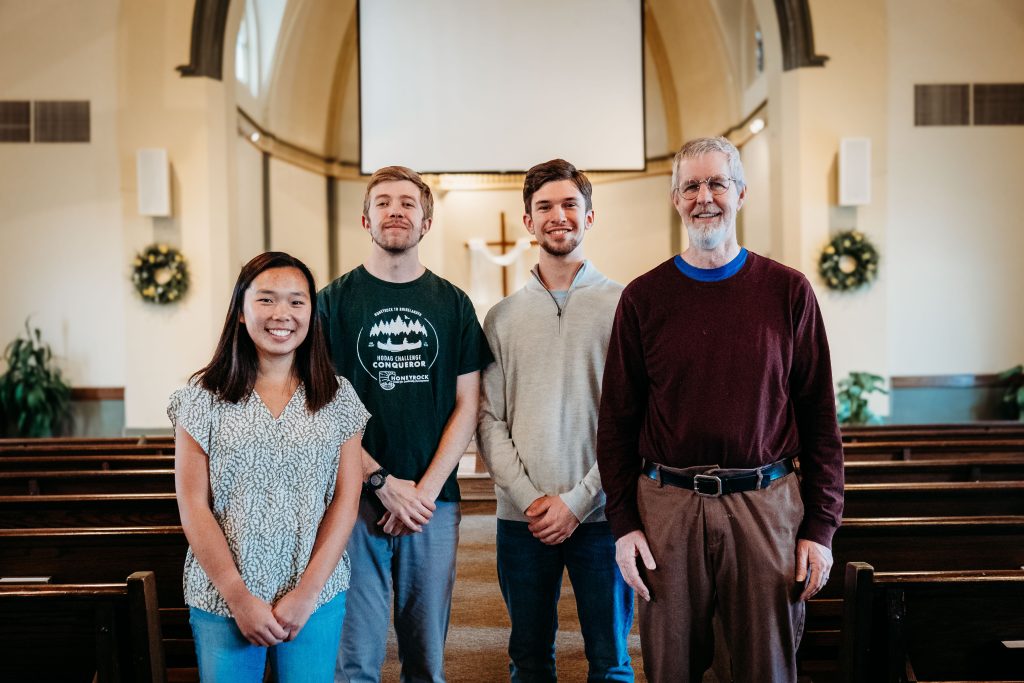
In programs involving college students, we want them to use whatever gifts they have in service to local churches because every gift is needed. We also want them to learn about the good work local churches are doing to spread the gospel and serve their communities as pictures of what they can pursue as they enter adulthood. Frankly, though, the students have done more over the years to teach those of us working for the CRM about how to encourage and energize the church.
Building these programs has been slow work, but the time has helped us work on our culture and the culture we want faculty and students who interact with churches to carry with them.
Let’s return to the idea of the love letter. We hope a lot of our programs give pastors, lay leaders, faculty, or students opportunities to imagine something differently, and what are lovers if not great imaginers? And sometimes imagination for something that is not current reality helps a marriage persevere and preserve its unity or heal a rift and restore unity.
The love letter is meant to be a full appreciation of the beloved. It’s not supposed to express those things the writer wishes were different about the beloved. “You’re so beautiful, and you would be more so if you lost 10 pounds.” “You are so talented, so how about you pick up an extra shift at work?”
There’s a big difference between loving a spouse or a church to want the best for it and manipulating a situation toward our desires. Imagination and manipulation are not the same.
Living Life Together
In his book Life Together, 20th century theologian Dietrich Bonhoeffer contends, “He who loves his dream of a community more than the Christian community itself becomes a destroyer of the latter, even though his personal intentions may be ever so honest and earnest and sacrificial.”
For me, learning not to apply my expectations on a pastor has helped me act from a desire to love and unify.
Paul guides us in Philippians 2. Verses 1-3 say, “So if there is any encouragement in Christ, any comfort from love, any participation in the Spirit, any affection and sympathy, complete my joy by being of the same mind, having the same love, being in full accord and of one mind. Do nothing from selfish ambition or conceit, but in humility count others more significant than yourselves.”
When I think about Christian unity and the way I hope the CRM approaches our work, it’s as lovers who value churches too much to think we can bend them to our wills. Of course not every person is compatible with every church. That’s been a lesson I’ve had to learn: “I just want you to love this congregation like I do. Why are you so critical of it?” But of course, I had to learn to love it over a long time. I still fight urges to push for something that’s more my will than God’s for the congregation.
But continuing in Philippians 2, Paul gives us Jesus as the example for our approach to each other: "Let each of you look not only to his own interests, but also to the interests of others. Have this mind among yourselves, which is yours in Christ Jesus, who, though he was in the form of God, did not count equality with God a thing to be grasped, but emptied himself, by taking the form of a servant, being born in the likeness of men. And being found in human form, he humbled himself by becoming obedient to the point of death, even death on a cross. Therefore God has highly exalted him and bestowed on him the name that is above every name, so that at the name of Jesus every knee should bow, in heaven and on earth and under the earth, and every tongue confess that Jesus Christ is Lord, to the glory of God the Father.”
Whenever I feel a spirit of envy for what one church has and mine doesn’t or a spirit of criticism for what that church over there does or a spirit of pride that I could really make a difference for that church—those are times I need Jesus. He did not grasp for himself but served for others. When we look for our ultimate confession that Jesus Christ is Lord, to the glory of God the Father, I pray that Jesus shows us that we have made that confession just in the place and among the people he intended us to.
At the beginning of Life Together, Bonhoeffer quotes Psalm 133: 1- “Behold, how good and how pleasant it is for brethren to dwell together in unity.” At the end of the first chapter, he re-states the verse and adds on his interpretation: “‘Behold, how good and pleasant it is for brethren to dwell together in unity’—this is the Scripture’s praise of life together under the Word. But now we can rightly interpret the words ‘in unity’ and say, ‘for brethren to dwell together through Christ.’ For Jesus Christ alone is our unity. ‘He is our peace.’ Through him alone do we have access to one another, joy in one another, and fellowship with one another."

Born and raised in Topeka, KS, Adam moved east for college and never left. He is assistant director of the Center for Rural Ministry and an associate professor of English and writing at Grove City College. Adam has published several articles in education journals that focus on the use of language in educational settings. He is currently engaged in several research projects designed to help us better understand rural congregations and the communities they serve.

