
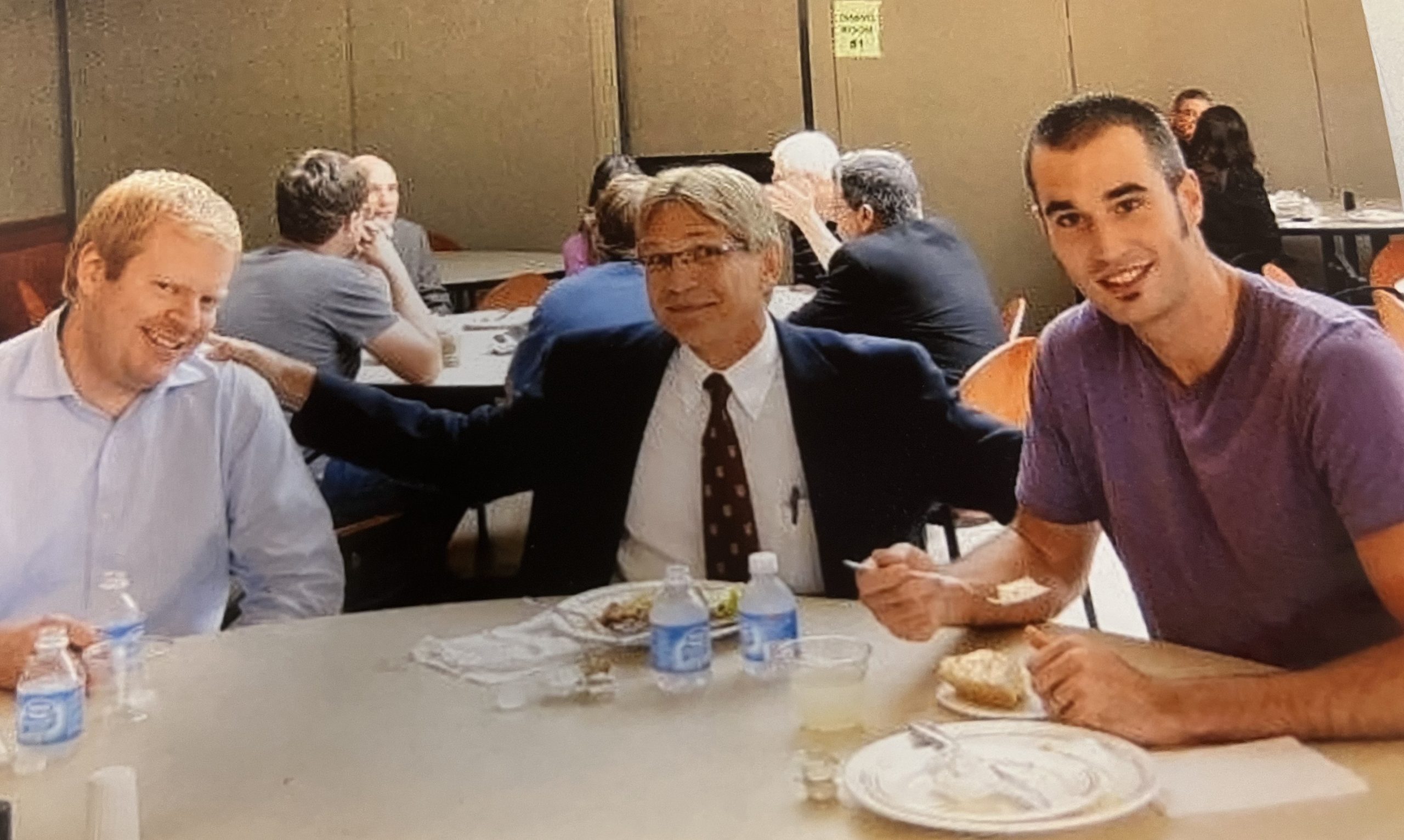
A couple years ago a young man who was then in my senior capstone class emailed me to ask if I would be his mentor. I was honored and a bit surprised. At that point, I was only teaching two sections of the college’s capstone humanities course, which meant that I did not have many chances to interact with students during their time at Grove City College. Over five semesters of teaching the course, I had grown used to getting to know students briefly before they graduated and moved on never to be heard from again. With such a limited relational runway, no students had ever come to me asking about mentorship.
Perhaps that’s why this request caught me off guard. I knew that my schedule didn’t have room for regular meetings or many long lunches, but I also knew that the sentiment my student had verbalized, first in his email and then in my office, was real. People—especially young people—really desire mentors.
I knew this was true not only because I had heard anecdotal stories about how much young people desire mentors, but because I could remember how badly I had wanted a mentor when I was his age.
In Search of Mentor Material
It is probably a common experience for college professors to see a bit of their younger selves in the attitudes, lifestyles, and hopes of their students. Sometimes a professor might see a similar tendency toward procrastination or recognize a familiar ambitious drive. At other times it may be a student’s anxiety about the future that stirs up memories of one’s own collegiate experience.
What I saw in the young man who came to my office that day was a desire to find someone who would be in his corner as a sounding board, encourager, and experienced voice. He wanted a mentor to help him mature in his faith journey, navigate some big decisions, and achieve the potential he thought he had but couldn’t quite figure out how to unleash. In all likelihood, his request was also shaped and crystalized by a certain stream of modern evangelical culture that emphasizes the necessity of mentorship.
I recognized these motivations because I had felt the same ones in my early twenties. In my case, however, the search for a mentor took me on a three-year, multi-state journey.
My New England Sojourn
I don’t know if it was the fruit of a lifetime of sermons on Paul’s mentor-like relationship with Timothy or the advice of the authors and preachers whose voices filled Christian radio and books during the early 21st century, but by the time I graduated from college I felt almost desperate to find a mentor. Perhaps that’s why, less than a year after our marriage, my wife and I both quit our jobs and headed to a coastal town in New England to join a loosely constructed community of like-minded twenty- and thirty-somethings.
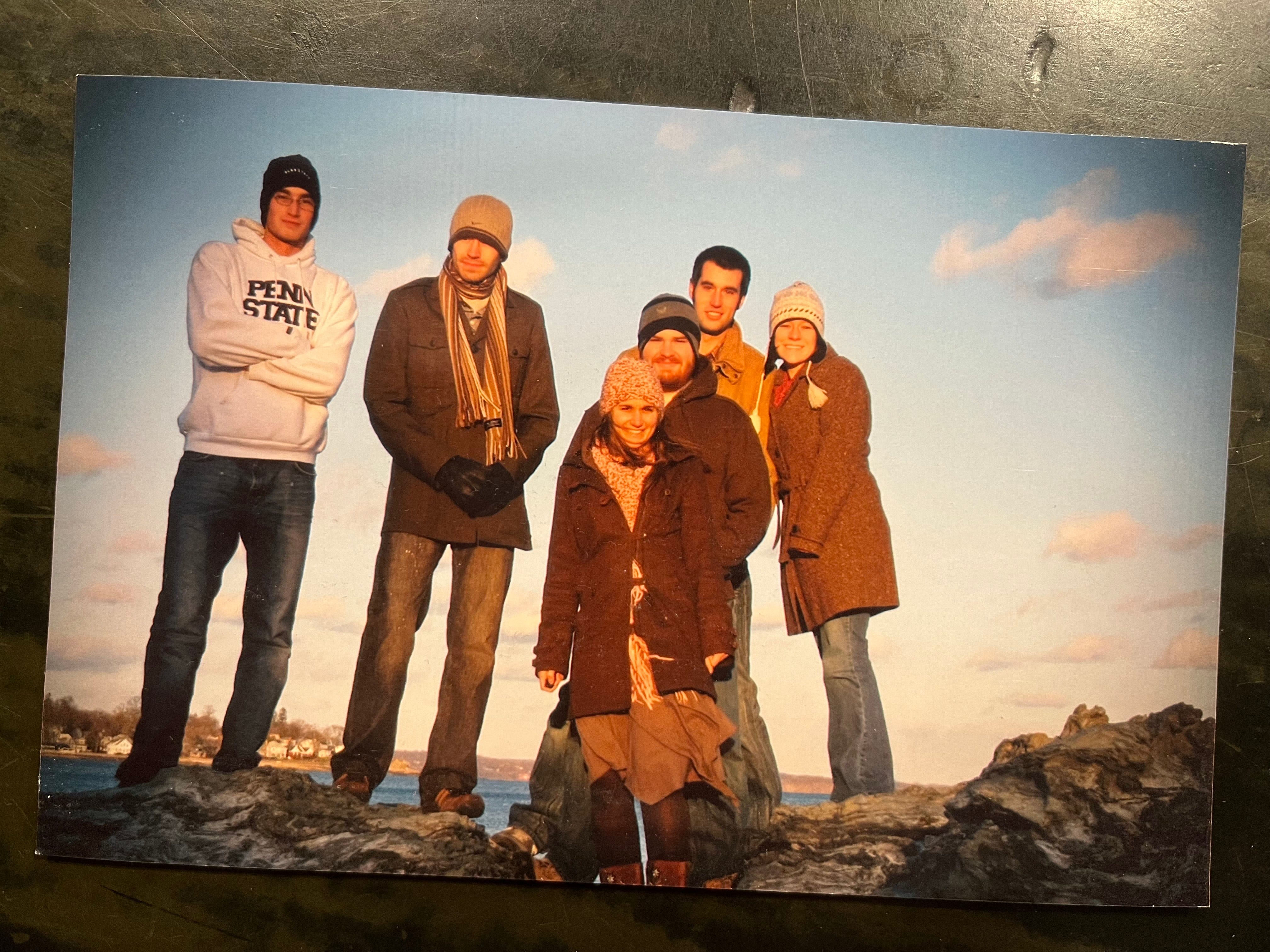
Why did my wife and I do something like that? I’m still not entirely sure. We were both from the same small, western Pennsylvania town, so we had a bit of wanderlust. But it wasn’t just wanderlust that pushed us out of or familiar surrounds. We didn’t move simply to get away. We moved for something. We were looking for new opportunities and experiences. For me, one of those opportunities was a chance to be closer a person roughly fifteen years my senior who seemed like prime mentor material. I was willing to quit my job and move several states away to sit at the feet of a real mentor.
As it turned out, there were several weak points in this plan. While I should have been able to recognize some of these in advance, others—like the recession of 2008 that occurred only two months after we got to town—were beyond my ability to anticipate. All I know for sure is that when we left New England the next spring, we were nine months older and a bit wiser. Thanks to stints in Red Lobster and Olive Garden, Aimee and I had learned a good bit about the service industry and made ends meet during the recession, but my mentorship hopes had been largely disappointed. My hoped-for mentor was busy with a new job and a young family. He hardly had enough time for them, so he certainly didn’t have time for regular meetings with an angsty twenty-five year old.
When we loaded our belongings in a U-Haul that April and drove home over Easter weekend, I felt like a failure. We had spent a year of our lives and a good bit of our savings on a quest that seemed to have come up empty. We settled into our hometown (and the second floor of my in-law’s house) and waited for the fall, when my wife was scheduled to matriculate into a physician assistant program in Pittsburgh.
Surprised by Mentorship
This was the plan at least.
It would take too long to really explain how we both ended up taking classes at Pittsburgh Theological Seminary that fall. The short version of the story is that God spoke to my wife during an evening of worship at a summer camp that July. She left the time of worship convinced that we needed to go into ministry. I felt a similar sense of call, so we ended up at seminary that fall. As our orientation transitioned to coursework, I had no idea that God was about to surprise me by answering my prayers for a mentor. This time, however, I wouldn’t have to travel multiple states away. I would simply have to open my eyes to the people God put directly in my path.
Scott Sunquist was one of these people. After taking a couple of his courses in church history and missiology, I developed an appreciation for his scholarship, spiritual earnestness, care for his family, and extroverted personality (in my experience, a rarity among most groups of professors). When Scott formed a small reading group for students who wanted to help hold each other accountable to daily prayer and Scripture reading, I joined. For the next two years I reported my Bible reading to Scott on a daily basis while he invested into my life in all kinds of ways. It is safe to say that I would probably never have earned a PhD or became a professor if it hadn’t been for Scott’s mentorship in my life.
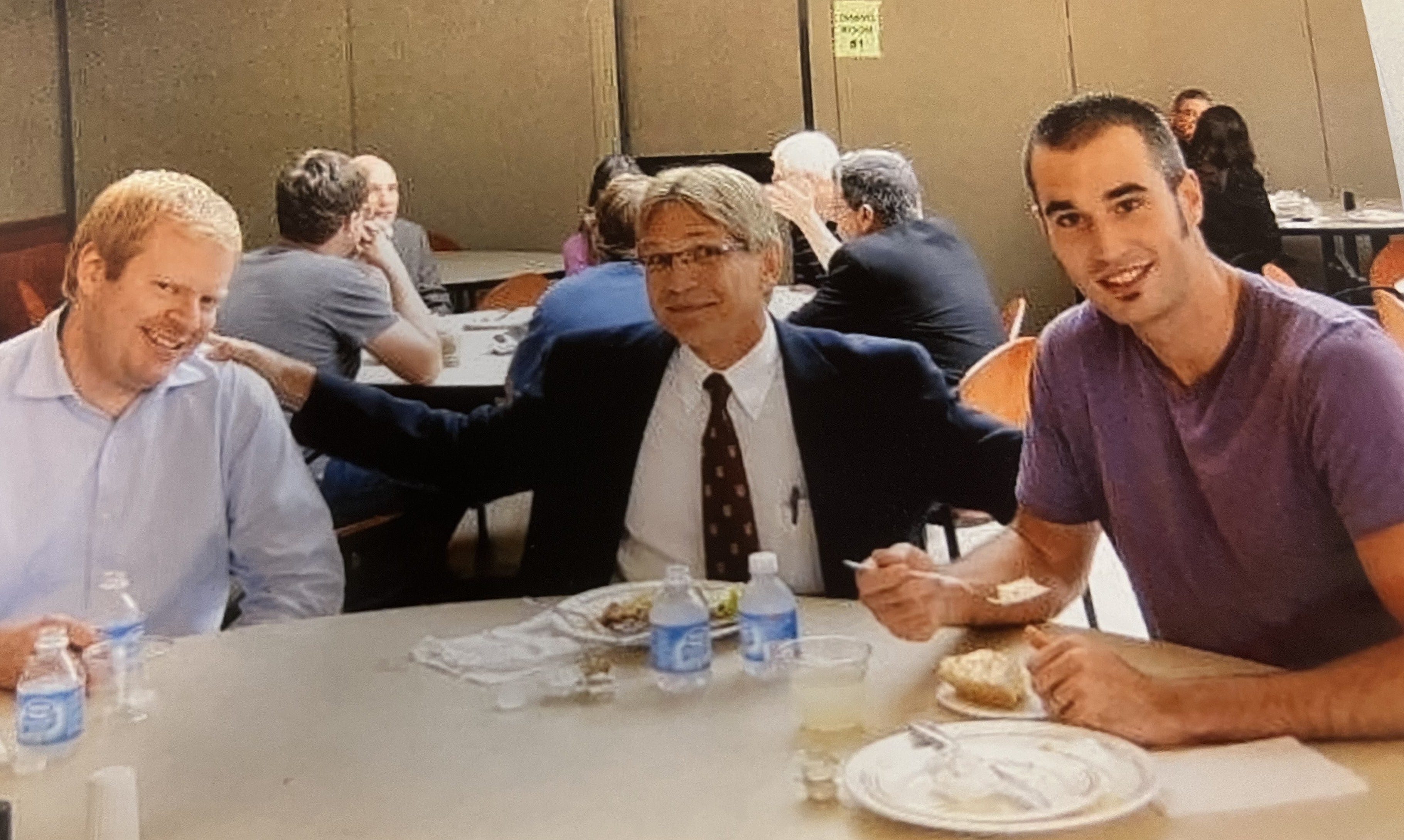
The crazy thing is that I hadn’t been looking for a mentor when I stumbled into one of the most formative mentoring relationships in my life. The only thing I was doing when God provided a mentor was simply trying to be faithful in the place where God had called me. Of course, God knew what I needed, and he had gone before me. He always does.
And it wasn’t just Scott who filled the role of mentor in my life. During my time in seminary God reminded me that he had always placed people in my life when I needed them. Sometimes I simply hadn’t noticed or appreciated his provision. But when I looked back, I could see them filling in my story like the numbered points on a connect-the-dots page. God had provided. He had given me a small constellation of mentors who had helped bring the story of my life together.
More than that, I discovered that all along God had been my mentor.
It was this realization—and the dialing down of my mentor-seeking-anxiety—that paved the way for me to recognize and appreciate the many other mentors God had provided along the way. All along, these mentors had been present in my life. I just hadn’t had the eyes to see them. I was looking for a mentor who was impressive and who could mentor me in all areas of my life. God had provided an amazing array of everyday folks who could shape small parts of my life. Together, their influence shaped me more than I had ever realized.
Dialing Down the Anxiety
I think my story is in some ways everyone’s story. Sure, there are differences in the details, and some seasons of angst last longer than others, but I don’t think God leaves any of us alone. God is our provider, but sometimes his provision of the things we need—be they life’s necessities, opportunities, or even mentors—comes in surprising ways.
That’s why the Christian virtue of attentiveness matters as much as ever in our distracted and celebrity-crazed age. The people God provides may not be the people we want or the folks we think we need, but in the end that is not our prerogative. Sometimes, when God is our coach, he calls plays and makes rotations we find baffling in the moment.
A List for Those Seeking a Mentor
Each of these convictions and experiences shaped my response to my student that day in my office. I knew I couldn’t be a formal mentor to him in the way he desired. Sure, I could meet with him from time to time to encourage him in his faith and be a sounding board as he processed decisions, but that was about as much as I could commit to without dropping another of my own commitments.
There was, however, something else I could do to help him process how God might already be providing mentors in his life. Before he came to my office that day, I jotted down a list of tips for finding a mentor. The list, which I hoped would dial down the the pressure he felt to find the right mentor, was simple, hopeful, and drawn from my own mentorship journey. It was a list designed to help him keep his eyes open for the surprising provision of God.
Since I first drafted this list, I’ve had the chance to give it to a number of people. Almost to a person they have said that it was helpful. I’ll provide an annotated version of this list in the coming weeks as the second part of this reflection on mentorship.
Until then, here’s to the goodness and provision of God in our journeys.
This essay first appeared on Charlie's Substack, "Strip Mine Jesus"

Charles E. Cotherman is executive director of the Center for Rural Ministry and an assistant professor of Biblical and Religious Studies at Grove City College. He is also a pastor at Oil City Vineyard, a church he and his wife Aimee had the privilege of planting in 2016. He has written on rural ministry, church planting, and history for a variety of publications including Evangelicals, Modern Reformation, Front Porch Republic, and Plough. He is the author of To Think Christianly (IVP Academic) and a contributing editor of Sent to Flourish: Guide to Planting and Multiplying Churches (IVP Academic). His next book, Strip MIne Jesus: Hope for the Rural Church, Small Towns, and Overlooked Places, will be released August 2026. He lives with his wife, four children, and a spoiled cat and dog in Oil City, Pennsylvania. Charlie can be reached at charlie@ruralministry.org or on Substack.

