

This semester, several classes at Grove City College included “service-learning” assignments to benefit local rural churches in partnership with the CRM.
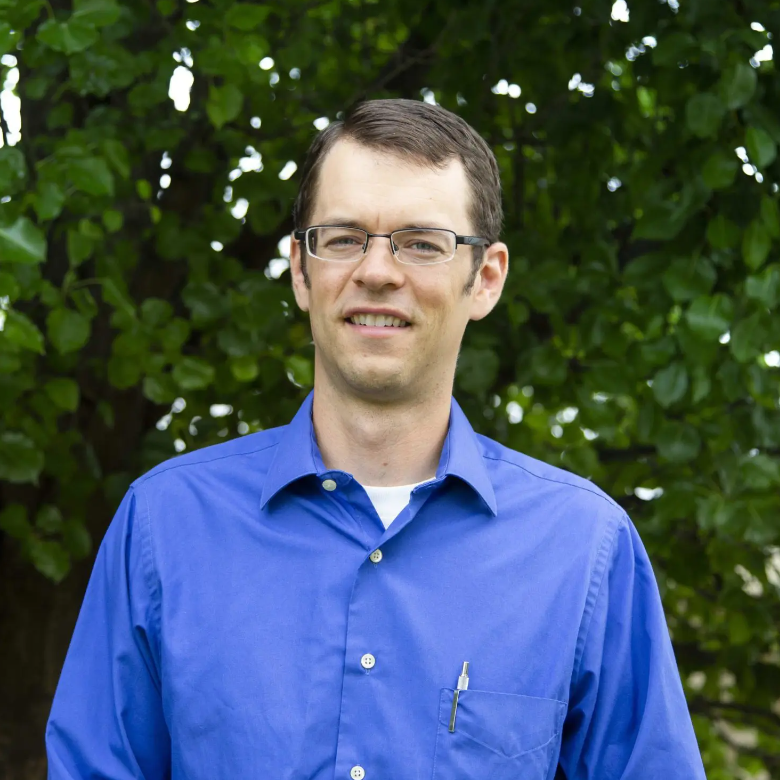
One of these classes was Environmental Ethics, taught by Dr. Jeff Bilbro. This class draws strong interest from students in a variety of disciplines, including Conservation Biology and English, and includes readings and projects centered around ethical stewardship of creation in a variety of contexts.
As Bilbro describes, one of the central questions of the course is “what responsibilities do humans have toward other members of creation?” His goal is to move past surface-level discussions of climate change, which are often “politically polarized,” and to move towards “the underlying theological and ethical questions” Christians must consider to faithfully steward the earth.
In the context of the service learning projects, Bilbro hopes students will begin to apply these principles within the local community and, specifically, at local churches. “I think it's really helpful when they go to a church, and they have to listen to a community and think about what this community needs…that's part of the learning process.”
On the Ground in Somerset and New Castle
The class was broken into two groups – one headed to Somerset, Pennsylvania to work with St. Paul’s Presbyterian Church, and the other drove to Rose Point Reformed Presbyterian Church outside of New Castle, Pennsylvania. Each team spent time getting to know church members and leadership before developing an actionable plan for a service project to benefit the church’s use of their outdoor spaces.
For the Somerset team, this looked like creating Sunday School curriculum. As Junior Jasmine Hoagland explained, “We got to know the people on their team and learn about their vision for this new farm that they had just purchased.” The goal with this new property was to build up a for-profit farm that would implement sustainable practices and would involve members of the church in its long-term maintenance.
“Although the church congregation allowed this purchase to happen very quickly, [the leaders] realized that the congregation was not completely aware of the whole reasoning behind [buying the farm]…They wanted us to come alongside their project to see how we could portray what we saw from their farm and connect that to Christian understandings about the Creation-Fall-Redemption [narrative] and create that into some sort of Sunday school material,” Hoagland explained.
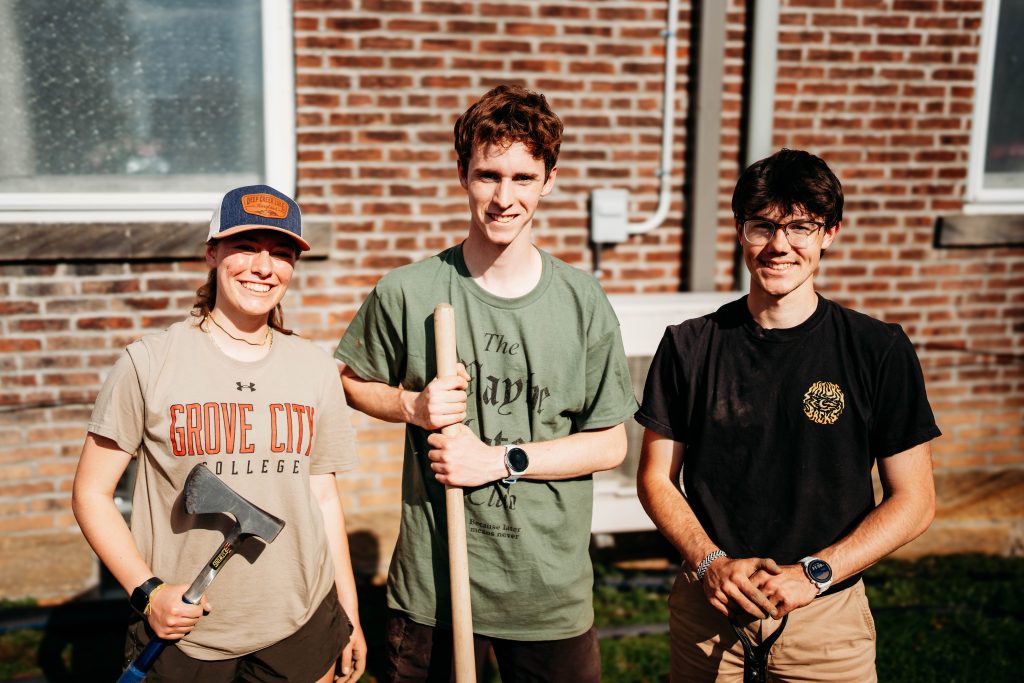
At Rose Point, the team was directed to explore the church grounds and consider possible improvements. After arriving at the church, they spotted an area along the side of the building that had no current landscaping in place. The team chose to build a small, landscaped area along that part of the property.
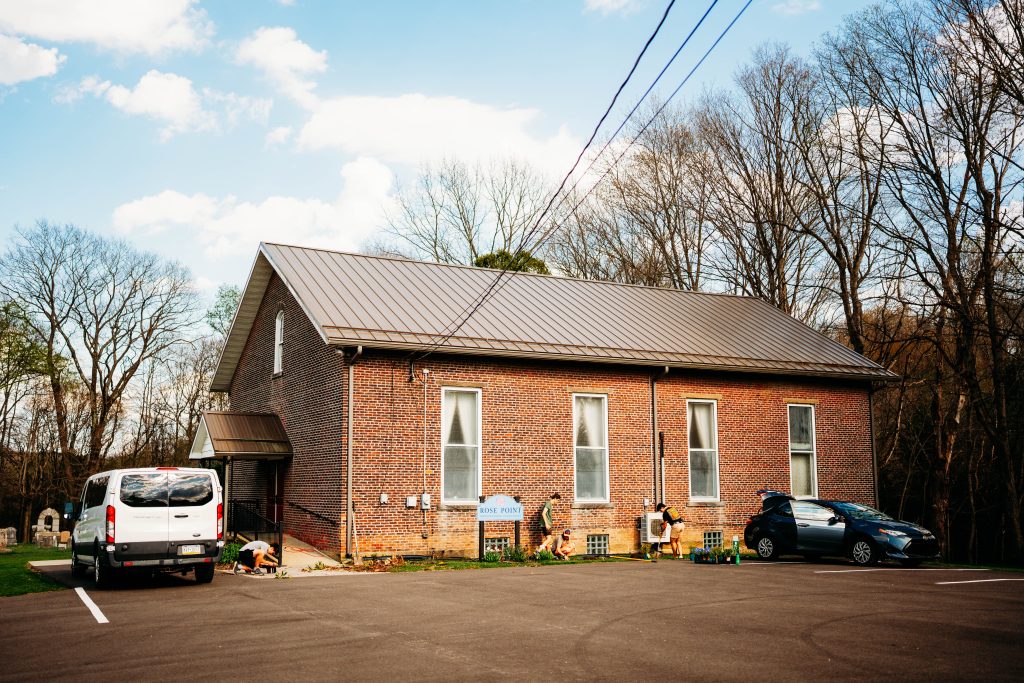
Junior Elijah Miller described his goals with developing this beautification plan for the church: “I just hope we can do something that's good stewardship for the land. We've bought native plants that hopefully will be low maintenance because they're native and perennial. But also it’s something that is beautifying the church, which is the place of worship for God, so that's the ultimate goal.”
Pastor Charles Brown, at Rose Point, was also impressed by the initiative the students in the group took for the project. “We didn't really have much out there to adorn the outside – it was very plain and not very attractive, and they made a big improvement that’s going to be a benefit for years to come.”
“I especially appreciate the initiative - they made the decisions, and that really took a burden off me. So often these kinds of service projects that happen in small churches end up landing mostly on the pastor - I have to make the decisions, I have to get the supplies. But they did all that for me, so it really was no stress or burden. They were really helping me out in a big way in how they handled the project,” Brown expanded. “And I’ve heard nothing but good feedback from members of the congregation about the new landscaping.”
The projects drew on the talents and interests of all the students involved – freshman Nolan Gille, a Conservation Biology major, contributed peach trees that he has been growing in his dorm room to add to the small orchard located on the Rose Point parsonage property. Being able to integrate theoretical class material, personal interests, and community involvement into one project has proven to be a blessing to both the students and the churches involved.
“I feel like I'm learning a lot more about why I'm studying what I'm studying and why this matters,” freshman Nathanael Fitzgerald explained. “Whether it's climate stuff or environment stuff or stewardship stuff, these things are so political and polarized now, so how can I sort out all of the junk and see what God wants to do and what we're called to do? I feel like this class is putting a lot of that into perspective for me.”

Anastasia Brown is a junior English Secondary Education major at Grove City College. She also serves as writing fellow for the Center for Rural Ministry.

