
I had to replace my over-the-range microwave a couple of weeks ago. Fortunately, I knew what to do because I had already replaced my over-the-range microwave about six years before. Hoping for a more durable fix this time, I…bought the exact same model.
Perhaps that was a bad decision, since I was disappointed in my last microwave’s longevity. But I figured that if I bought the same microwave—down to the model number and SKU—that would help the replacement process go more smoothly. The mounting bracket would be the same, so I might be able to re-use the old one. The holes for the bolts that hold the top of the oven to the shelf above would be the same.
I was wrong. The bracket that came with the new one was different and not compatible. The holes in the top were different, but not so different that the new holes I would have to drill in the shelf would be out of the way of the old ones.
So, one bracket out and one bracket in. One shelf removed, another cut from a ¾” sheet of plywood to the template and size of the old one, mounting blocks added to reinforce it, holes for mounting bolts drilled, a hole for the power cord cut, a new shelf mounted.
So what I hoped would be a job of about an hour became a chore of three hours. And microwaves are heavy, so this wasn’t just my time but my wife’s as well—as we both felt the pressure of using the last weekend before school started to spend quality time as a family and prepare to teach new students in two days.
When we finally finished, I wasn’t feeling accomplished. I was feeling sullen and frustrated.
Church Work in the Local Context
How often does church work feel the same?
A pastor or congregational leader is sure that the congregation can grow if a certain program is implemented. Or the community will surely support an outreach program the church leads if the right pitch is made or the right charismatic leader is in place. But after a year or two, the attendance is about the same, or the program is walking along with a couple of committed volunteers but nothing like the stature the church had hoped for.

Proverbs 16:9 reads more truly the longer we do pretty much anything: “A man’s mind plans his way, but the Lord directs his steps” (RSV). We are so sure that for something to work out, it has to happen the way we planned it in the time we set for it, when in fact we only have partial understanding of the Lord’s intentions and methods.
But, by analogy, my microwave experience has reminded me of four things.
1. No Exact Copies
Why would it surprise me that the Shepherd who left the ninety-nine to find the one allows different approaches to church work to flourish in different times and places? If I truly believe God knows me and every individual as a unique person, and therefore, every church of individuals as a unique expression of His global bride, then of course He will work with a unique fingerprint on each church. Resources and curriculum that come from elsewhere are great and important, and churches should be sharing ideas with each other, but the outworking of each will have a local flavor as a testimony to His limitless creativity and care for every person and community.

2. Time
Pastors who have attended CRM conferences over the years have heard variations on a similar theme: timelines in churches are slow. Don’t think in terms of months or a year but a decade, maybe more. We can be comforted that God’s kingdom isn’t founded and completed in our lifetime. Whether our local church was planted this year or in the 19th century, God’s patience will always extend beyond our own, and His plan for our little corner of the world will be fulfilled at its proper time. We will never have the full picture of God’s purpose for our particular decades on this side of Heaven. This is a blessing!
3. Structure
And where does that time go? Faithful work will continue to shape the structures that support the ministry. Most of you can probably bring to mind a program that was vital for a time but died out when a leader moved on; we’ve probably been responsible for a few ourselves. Part of our responsibilities as leaders is to build a structure and support system for ministry so that it doesn’t depend on a single person or single generation. As long as the program is following God’s will to meet people’s needs, there are new leaders and workers coming in who can read the “book” of the program, refine it over time, and glorify God in it.
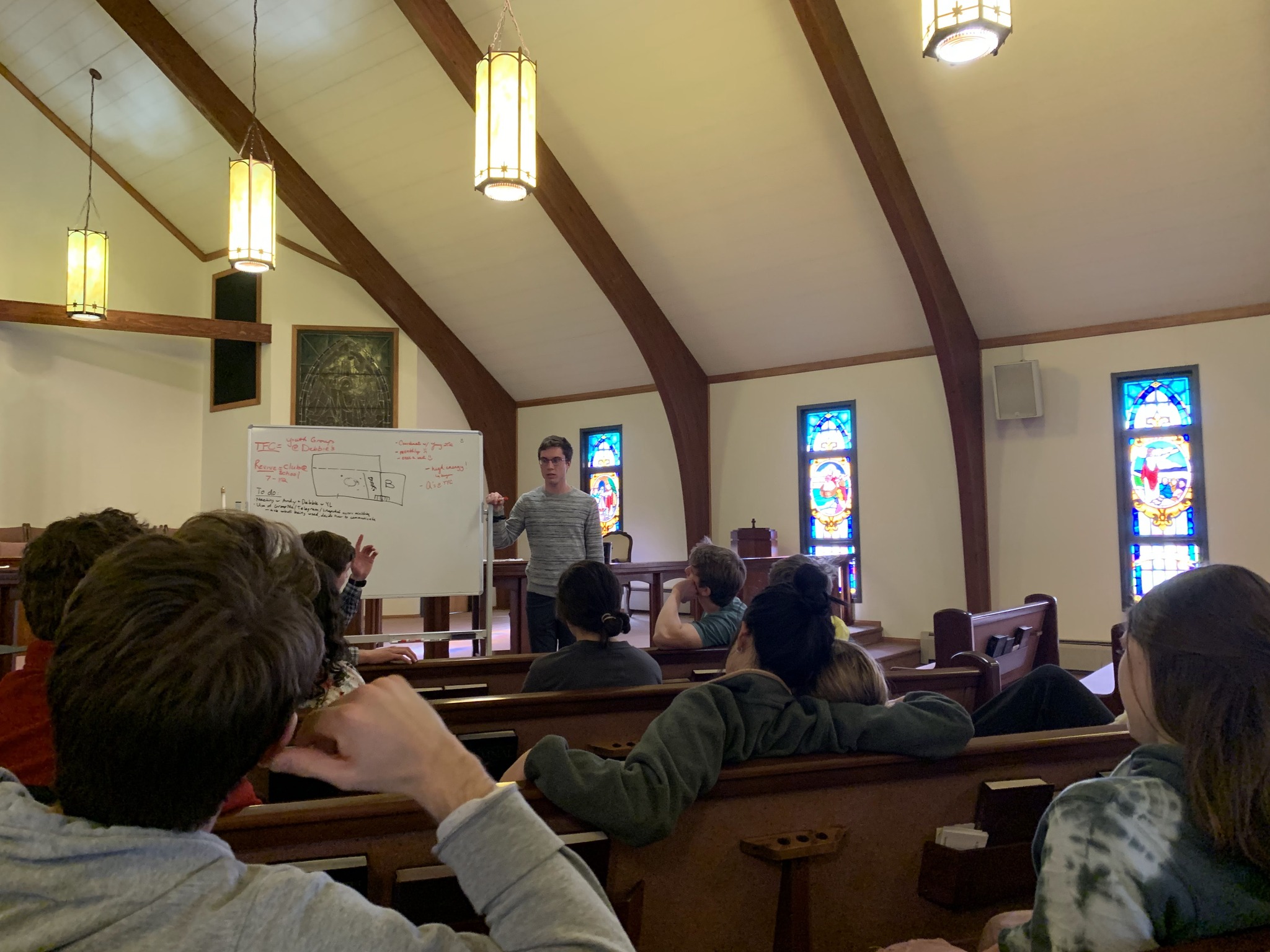
The CRM has had to take the time to build structure to catch up with vision several times. We have programs that connect Grove City College students with churches in the region through short-term mission trips or weekly attendance . We would love to have several dozen students involved in each. We don’t. We’ve seen growth in these programs, but it has been at a pace that has given us the time to build supports that will help these programs thrive for many years as we refine how we talk about the programs with students and how the CRM will support student teams. We’ve needed time to build documentation that helps everyone agree on a common vision and process for the programs. Lord willing, these efforts now will help more students experience God through churches in our region in the future.

4. Attitude
We must do church work, as we do all other work, as to the Lord and not to men (Colossians 3:23). Do I want CRM programs to thrive or my local church to thrive because they build my spiritual and professional resume? Or am I committed to them because I am convinced that people will encounter God through them? I have to decide that any work to which I am called in a season is an offering to God even if it doesn’t meet my expectations, even if I don’t see my involvement having obvious impacts, and even if I get called out of that work and into something else. God’s purpose might be for a ministry effort to explode in a revival in a matter of weeks or it might be for it to be built over a matter of years after dozens of meetings and discussions. The meetings might feel bureaucratic, but they could establish the conditions for individuals to find their way to Him in a unique way. The CRM has seen some of both, but our call is to be content and whole-hearted in our service no matter the circumstances.
The good news of our humanity is that all of our efforts will be imperfect. Our expectations run ahead of us. That is our reminder to look to the real author and perfector of our faith for His purposes and to give our efforts to His glory.

Born and raised in Topeka, KS, Adam moved east for college and never left. He is assistant director of the Center for Rural Ministry and an associate professor of English and writing at Grove City College. Adam has published several articles in education journals that focus on the use of language in educational settings.

