
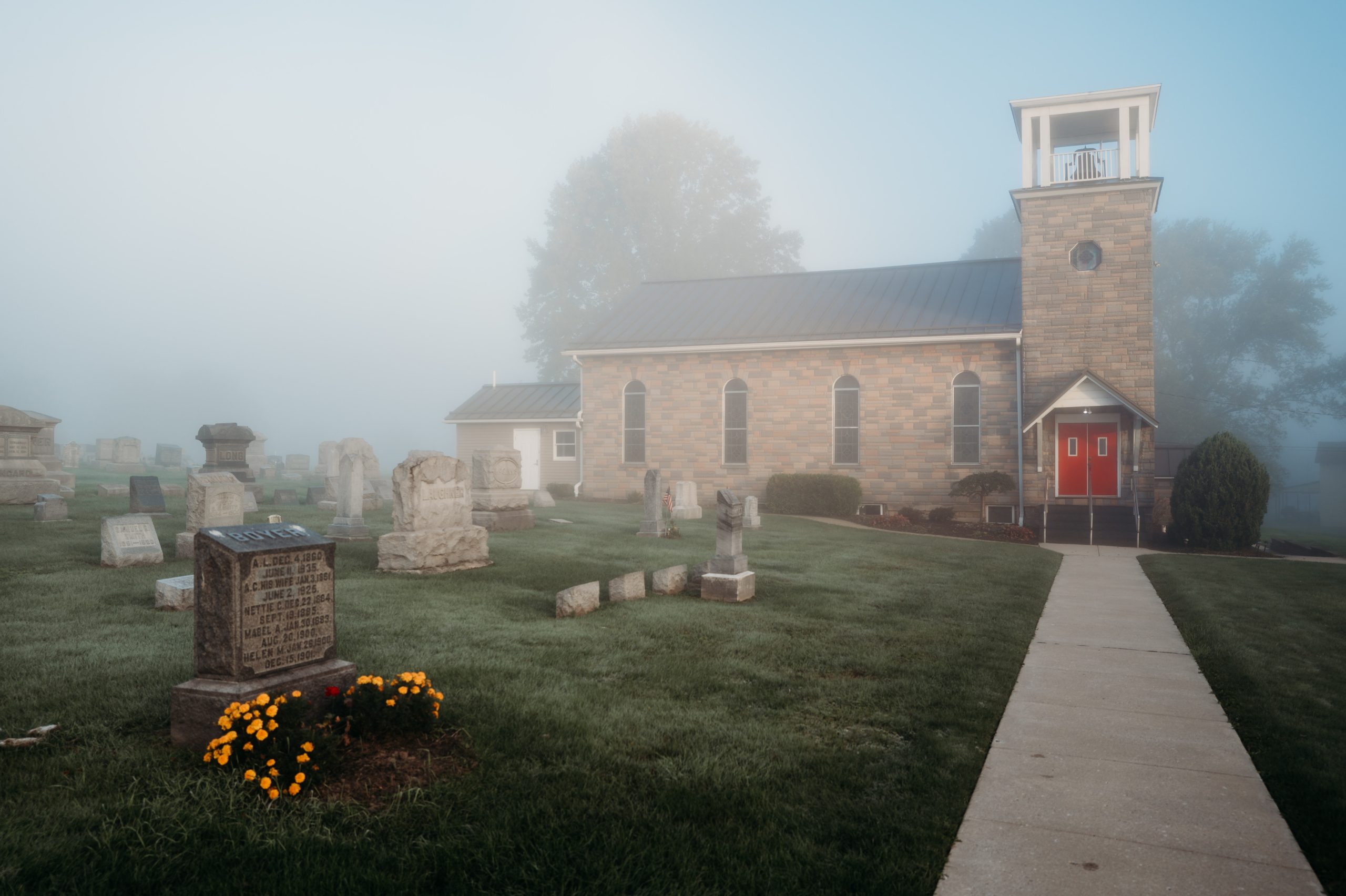
Many rural churches have a unique resource that is increasingly vanishing from new and suburban churches – something that even congregants rarely think twice about. But three pastors from rural congregations have weighed in on the blessings and spiritual guidance they have discovered from this resource found right outside their doors – the presence of a cemetery.
Cemeteries may be dying out. The U.S. cremation rate reached 63.4% in 2025, up from less than 10% in the early 1980s. Most churches being built over the last few decades do not even consider adding a cemetery to their blueprints. But many rural, historic churches have cemeteries with graves documenting church and community members who “finished the race” hundreds of years before current members were born.
And this historic continuity is what appeals to Pastor Charles Brown, from Rose Point RP Church outside of New Castle, Pa. “I think for me – and I hear other people say it, too – our little church cemetery is a reminder every week we worship of the brevity of life and the importance of eternal things,” he explained.
He sees the cemetery as a snapshot of the community that has grown around Rose Point over the past 192 years. “There's a lot of people there who are former members of the church or former pastors or missionaries,” he said, and described the encouragement he has received from seeing the cemetery each week and reflecting on the longevity of the ministry at Rose Point.
Some of the last names on gravestones are still shared by members sitting in the pews. Family members that have left the area still find their way to gravesites on holidays like Memorial Day – or on their way back from vacation.
“Some of our most recent visitors had been on a fishing trip, and they were coming back to the airport but decided to swing by because one of their relatives had recently died and was buried at Rose Point…they came right after church ended, we talked a little bit,” he described. “So we get to interact with a variety of people [because of the cemetery].”
Signposts for the Gospel
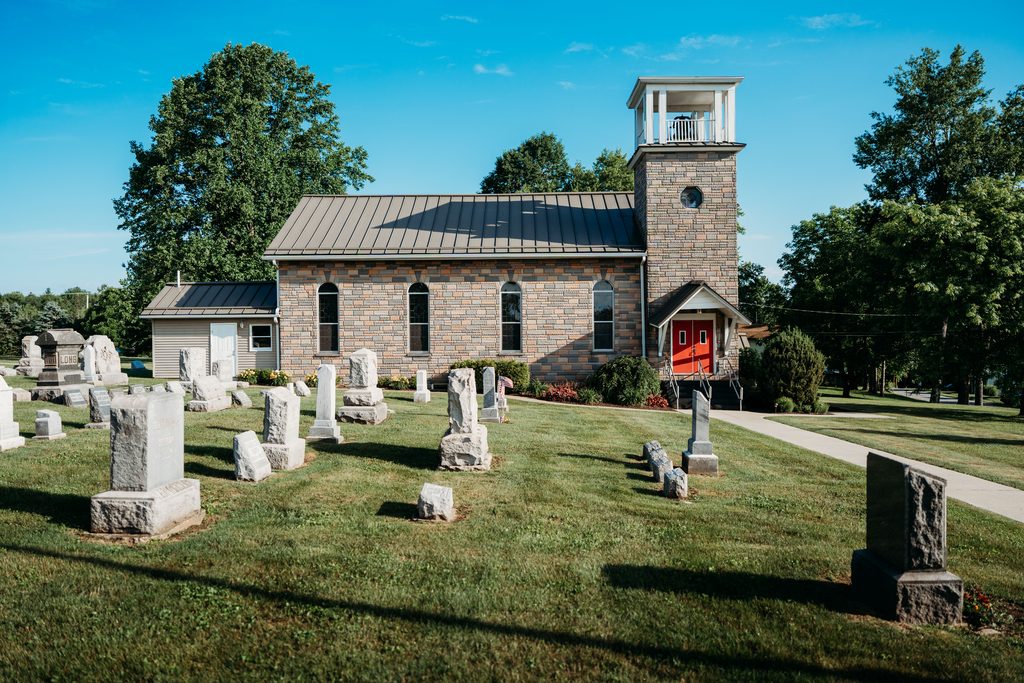
The spiritual realities inherent to a cemetery are also important to rural churches. For the spiritual growth of his church, Pastor Rob Patterson of Bethel EP Church in Enon Valley, Pa., has found the local cemeteries (Bethel cares for two) to be illuminating illustrations.
“We've been very blessed at Bethel that our physical surroundings have been such signposts for the Gospel,” he explained. The church is also next to an orchard, and having these symbols of life, death, renewal and resurrection around their building has helped shape his sermons about this life and the life to come.
Having been raised in an urban area, these rural symbols have also impacted his own faith and view of the ministry at Bethel. “The urban culture has become a transient culture…but I have people in my community here that have been baptized, their kids have been baptized, their grandkids and their great-grandkids have been baptized in this building. That longevity is possible because of the environment of the rural. It keeps and holds its own way more than an urban environment does,” he said.
“I just did a funeral 3 weeks ago…she was 93, and she was an absolute matriarch in the community,” he described. “And she was buried right there in Bethel Cemetery.”
Maintaining a Connection to History
Bethel also keeps the cemetery at the center of their community life through fun traditions, like a monthly trivia challenge organized by a member who is passionate about the history of the area. The challenge has encouraged congregants to more actively consider the people and events that have shaped their church and community through history.
But cemeteries don’t just teach congregations about the past. They also influence a church as it looks to the future and considers the values that will continue to shape the congregation.
Jason Schepp, of Christ United Church outside of New Castle, Pa., appreciates the way the cemetery at his church shapes the past. “[The cemetery] does have an effect on the church from an understanding of historical value…it's important to understand the faith isn’t just one generation, but it does move forward and transition.”
When a church inevitably faces change, a cemetery can be an opportunity to reflect on the legacy of the church’s past. “People have told me, like, ‘you know our grandparents are out there,’” Schepp said. “It is good that there's an underlying theme of ‘what values do we carry forward?’…There is this community history, decades and generations worth of reminders when you go outside the church doors. It reminds you what things you need to maintain as you do transition with…the ways you present the Gospel.”
In a world that is uncomfortable with death and considering the eternal, cemeteries can easily fall away from community memory. But for the life of the church, they can be powerful testaments to God’s faithfulness, encouraging reminders of the life to come, and necessary guides for churches who look towards the future without forgetting their past.

Anastasia Brown is a senior English Secondary Education major at Grove City College. She also serves as writing fellow for the Center for Rural Ministry.

