
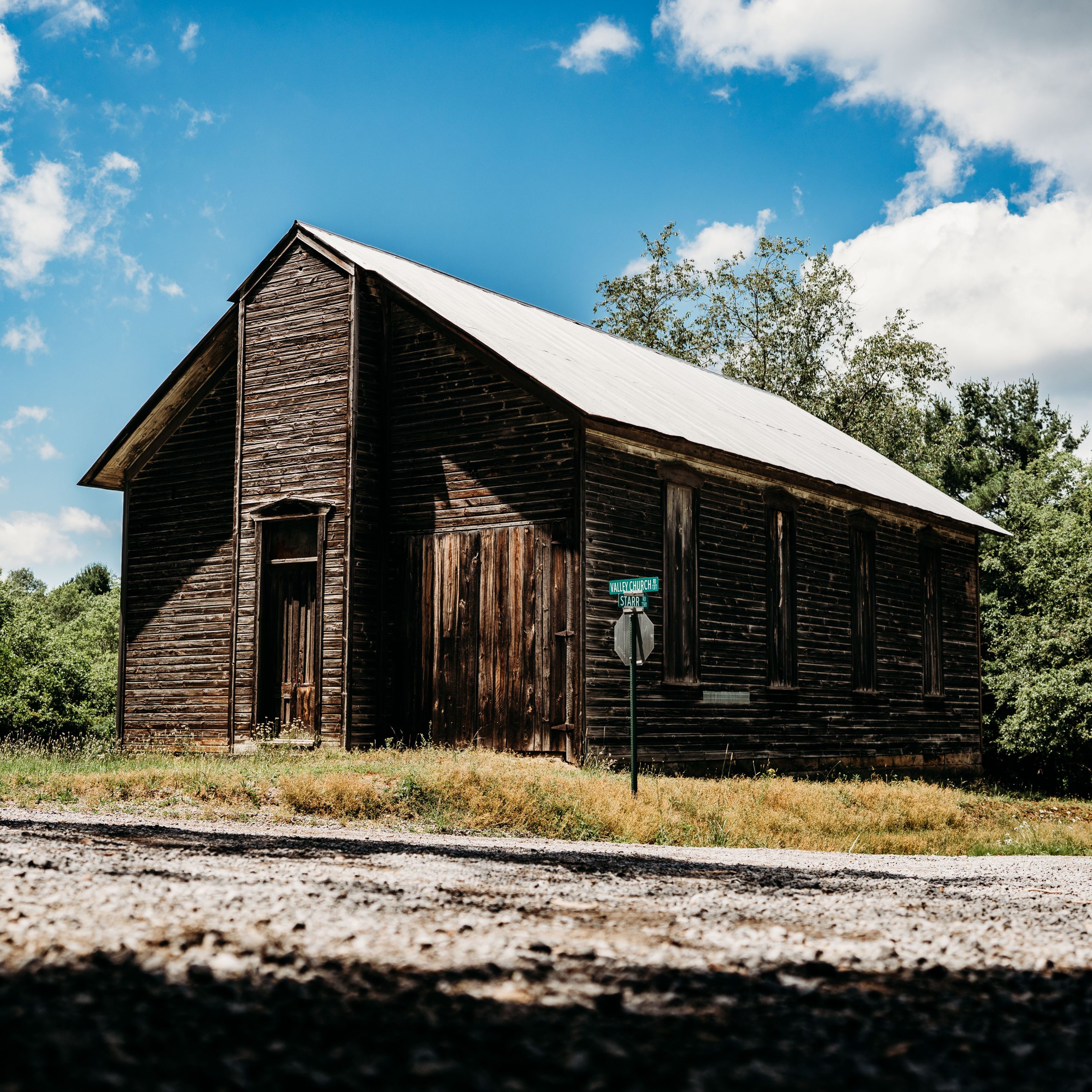
Author's Note: This paper was originally given at the 2025 Grove City College Christian Writers Conference. The theme of the conference was "Complicity and Hope in Wendell Berry's Membership."
“The world is charged with the grandeur of God.” So begins Gerard Manly Hopkins’s poem “God’s Grandeur.” But, as Hopkins knew, this positive assessment of the world is only part of the story. It is not only transcendence that touches the world. Creation has also been touched with a less careful hand. God’s good creation has been bruised and mistreated by the very creatures God created to tend it. Though still charged with the grandeur of God, the world also bears the signs of mistreatment and mismanagement—of human stewardship gone awry. Now, “all is seared with trade; bleared, smeared with toil.”[1] Filled with both God’s presence and sin’s effects, the world is divided between two realities, being both more beautiful and more broken than we can bear.
A little over a century later, the work of Kentucky farmer and writer Wendell Berry cultivates similar poetic ground. In Berry’s prose and poetry, the wonder and want of the world are both on full display. And—what is perhaps most uncomfortable of all—he often forces us to look squarely at our own complicity in the complex cultural, environmental, and relational landscapes that shape our lives and unbind local culture.
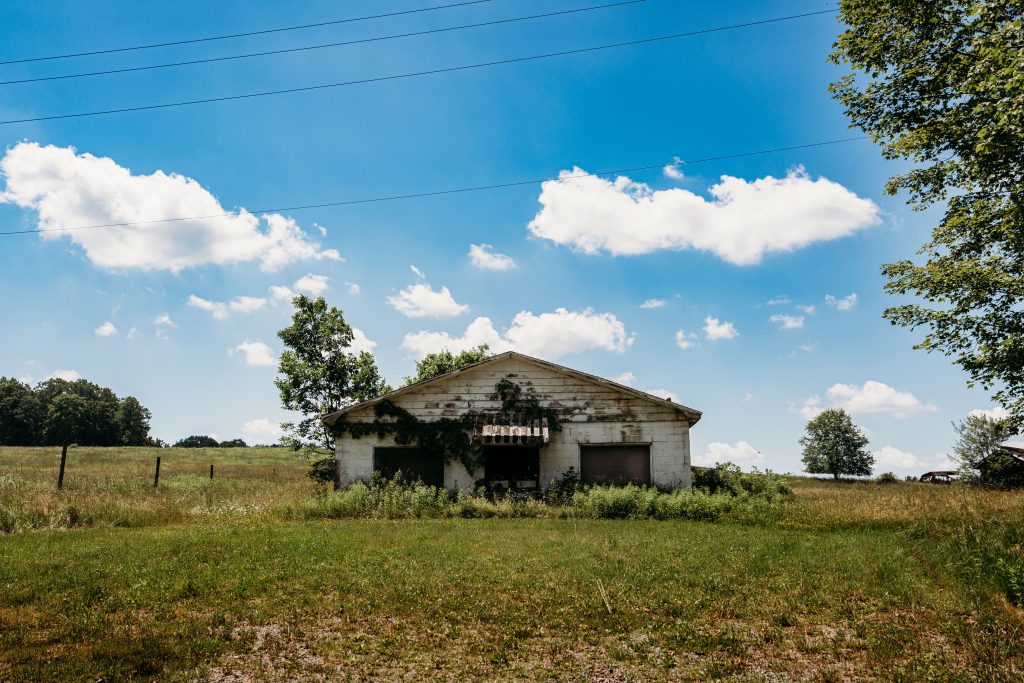
Berry’s 1989 essay, “Waste,” provides is a good case in point. In a less than three pages, Berry outlines the tension that exists between outside forces that break down rural communities and the complicity of rural residents themselves in these processes.[2] In his description of the landscape of his small-town Kentucky community, Berry notes, “Our roadsides and roadside fields lie under a constant precipitation of cans, bottles” and “sometimes whole bags of garbage.”[3] In short, consumer culture run amok has left rural areas covered in its refuse.
But, as Berry goes on to say, the problem is not simply “out there” or with “those people.” His impression that he lives “at the bottom end” or “on the receiving end” of the waste problem is, as he admits, false. “Country people contribute their full share,” Berry notes.[4]
The toll of this lifestyle is not simply ecological. In a fascinating pivot Berry moves in the last section of the essay toward a second kind of damage denoted by the pollution of the rural places. In addition to the ecological toll, the waste that piles up in “an economy…wasteful from top to bottom,” takes a toll on us. There is a “human damage” that accompanies the drive for efficiency and centralization that has pushed aside “household and local economies” in which people young and old once had meaningful contributions to make.[5] As people lose their sense of meaning and purpose, they also lose their attachment to community and place.
The Loss of Local Culture
This human toll—the loss of meaning and memory—is part of what Berry describes in another piece from the same volume of essays. Like “Waste,” Berry’s essay “The Work of Local Culture,” begins with a discussion of physical waste (in this case a long-abandoned bucket hanging on a fence post) and then moves to the human toll.
Unlike the cast-off goods of human use that Berry laments in “Waste,” the “battered…bucket” on the fence post inspires fascinated appreciation rather than distain. Berry’s surprising affection for this piece of litter-turned-landmark is partially due to the process unfolding within the bucket. For decades, the bucket had received into itself whatever things came its way—rain and snow, leaves and nuts, feathers and seeds. Berry marvels at how this eclectic assortment results in a garden of new life, “an artistry and a farming far superior to mine, or to that of any human.”[6]
For Berry, the bucket with its gatherings and decomposition provides an image of the work local cultures do as they gather collective memory and build community. As he notes, “A human community, too, must collect leaves and stories, and turn them to account. It must build soil, and build that memory of itself—in lore and story and song—that will be its culture.”[7] Any human community hoping to endure over the long haul must draw these stories and the folks who are telling them into itself with what Berry describes as a “centripetal force” that holds “local soil and local memory in place.”
The problem is that smaller communities seem increasingly incapable of holding these things together. Rather than drawing things into themselves, many small communities have undergone a movement in the opposite direction. As Berry notes “great commercial and industrial cities…have drawn irresistibly into themselves both the products of the countryside and the people and talents of the country communities.”[8]
The result of this rural exodus has been a devaluation of country people and places. Once again, the problem isn’t just “out there.” The problem lies closer to home. While the country may be more than ever “the colony of the city,” Berry observes correctly that this is a colonization welcomed and even sought out by country people themselves, who “more and more live like city people and so contrive their own ruin.”[9] Connection to people and places becomes more tenuous, more transactional. Memory and meaning are lost. This is the human damage—the fracturing of families and farms and friendships. As the next generation moves on and out, the community does not only lose the future; it also loses the past. The young keepers of the old memories are gone.
It is worth noting—especially when writing as someone employed by a college—that educational institutions often contribute to this rural out-migration. As Berry noted in 1988, “Young people still grow up in rural families and go off to cities, not to return. But now it is felt that this is what they should do.”[10] Indeed, more recent sociological work published by Patrick Carr and Maria Kefalas in their 2009 book Hallowing Out the Middle: Rural Brain Drain and What It Means for America, lends emphasis to this point.[11] In many small towns teachers invest the most time and energy in the students most likely to leave. As Carr and Kefalas note:
“Small towns play an unwitting part in their own decline. Teachers, parents, and neighbors feel obligated to push and prod the talented kids to succeed, yet, when their best and brightest follow their advice, the investment the community has made in them becomes a boon for someplace else, while the remaining young people are neither afforded the same attention nor groomed for success of any kind. Whether this is willful neglect or a rationale deployment of resources, the result is the same: small towns…have become trapped by their self-fulfilling prophecies.”[12]
When members of the next generation leave, it’s not just human resources that are lost, local memory—and with it, local culture—also disappear. As Berry notes, this results in a kind of amnesia in which “We feel ourselves crowded more and more into a dimensionless present, in which our past is forgotten and the future is…forbidding and fearful.”[13]
How does one move intentionally against headwinds that are so powerful? How do those of us who live in and care for rural areas and small communities take steps to remember when so much in our local culture is being forgotten?
One way we might begin is by developing an eye for the work of salvaging.

Salvaging Local Culture
When I read essays like Berry’s “Waste,” I can’t help but think of the landscape of my childhood. I grew up in a rural community in rural Clarion County, Pennsylvania.
Roughly the same time Berry was writing the essays mentioned above—my parents purchased a seventeen-acre parcel of abandoned farmland that was adjacent to our ten-acre homestead. We tore down the main barn and the pig shed—both dilapidated and beyond repair. We planted trees and generally tried to salvage a piece of land marked by hard use and neglect. This salvaging also took the form of cleaning up two large, unregulated garbage dumps on the property. After few long Saturdays of work, we were able to eliminate both mounds. But these were only two of the many remaining piles of garbage strewn through our neighbor’s woods or in the ravines of adjacent strip mines.
Over the years, my brother and I would often accompany our father to other local dumps looking for anything we could use. Like all thrifting, our garbage mound searches felt a bit like treasure hunting, so it was easy for my brother and I to spend hours looking through these repositories of waste and treasure.
As kids we thought children’s toys were especially good finds. Over the years we discovered several abandoned Big Wheels that we took home and put to good use. Even my first bike was salvaged from a large dump located on a neighbor’s section of the strip mine. It was a purple girl’s bike with a banana seat that my dad had discovered one night as he walked home after an evening of archery hunting. He rolled it home, spray-painted it black, and I was off to the races.
Attention Bestows Value
As a child, I didn’t have a theological grid for this allegory of micro-redemption. All I knew was that it was exciting to see something cast off come to life again in my hands. My brother and I felt genuine joy—and perhaps a bit of hard-earned pride—as we rode salvaged bikes or built things with discarded pipes and other cast-away construction items. In the process, I learned an important lesson about the power of attention: Attention bestows value. Attention and love go hand in hand.
That is why, more and more, I’m convinced that one of the primary problems facing rural communities, like Berry’s fictional Port William or those in the corner of rural northwestern Pennsylvania I call home, is a failure of attention.
In a culture defined by devices and the endless diversions they offer, there is a sense in which our entire society has a communal form of attention deficit disorder. Our children are part of what Jonathan Haidt describes as an “anxious generation,” and our attention spans grow shorter as our screentime reports lengthen. In this attention economy, it is rural places and mundane rhythms of family life and community that suffer most. Cities have always clamored louder for attention than small places and ordinary rhythms of life.
Because attention and love are connected, when people fail to attend to their places and the people whose lives and stories fill them, it should come as no surprise that fewer and fewer find that they can love them. This is the recent history of small places. It is a history we have been drawn into just as it is also a history we have made ourselves.
When we fail to attend to the people and places we experience everyday, we should not be surprised when these places suffer. Disregard has consequences. When people and places don’t get enough attention, they break down. Anyone who has been around children for long can identify the antics of an attention-hungry child. Anyone who has eyes to see can identify the look of an attention-deprived place. The first step toward salvaging local culture is to attend well right where we are.
Hannah Coulter and the Power of Attention

Berry’s novel Hannah Coulter is a book-length reflection on the power of attention. Through Hannah Coulter’s perceptive and attentive eyes, the reader encounters a world full of pain and hope. In some cases, the pain and hope are self-inflicted. At other times these realities are outside the characters’ ability to control or channel them. Amid it all, Hannah Coulter, like many others who are part of the Port William membership, find that the hope that endures is a hope that persists in spite of—rather than devoid of—the hardships and realities of life. It is this attentive posture that allows Hannah to salvage hope without delusion. She sees Port William as it is, but she also sees it as it can be. Both lines of sight matter.
We can see this kind of informed and hopeful attentiveness at work when Hannah’s soon-to-be husband Virgil Feltner takes her to what the Feltner family calls “the far place” at the top of Port William hill. From the top of the hill, Hannah and Virgil can see for miles. It is as if they can see the whole world, or, as Virgil, notes, “some of the best of it anyway.”[14]
But the distant horizon is not all they see when they are there. They also see a future together that seems so near they can almost touch it. As they go the “the ghost of the house” that had once stood between the two, still-standing chimneys they see—backward in time and forward in time—with the attentiveness of hope that comes from within the realities of life. It is a “a fine place,” even a “beautiful” place, but it is not a perfect place. It might be “cool and breezy in the summertime” as Virgil notes, but as Hannah replies, it would also be “cold and drafty in the wintertime.”
Virgil knows Hannah is right. He also knows the house can be salvaged. Virgil admits, “The wind lifted the rugs off the floor, I expect” but he weds reality to hope, by noting, “We could make it tight.” Hannah’s response, “Here would be lovely,” shows that she has caught Virgil’s vision for salvaging the far place.
But such salvaging is not to be. Before Hannah can salvage a home, she must salvage her young life following the death of Virgil in World War II. Eventually, Nathan Coulter catches her attention and her heart. Once again, the capacity to attend to a place with hope that looks through and accounts for reality is at the heart of Hannah’s posture toward the past, present, and future. When Hannah and Nathan look over the old Cuthbert place—the place that they will learn to refer to as “our place,” they have to attend with informed hope. Nathan’s stoic assessment that the farm would “never be what is once was,” but that it could be “better than it is” is an invitation and a question.[15] Will Hannah be able to see? Does she want to see?
The answer, as it turns out, is yes. Hannah sees the future shining before her once again. It isn’t perfect then, and one expects that the young widow also knows that it won’t ever be as perfect as she might wish. But she can see a future marked by the attentiveness of love and hard work. Looking over the bedraggled farm she sees through reality in hope: “It, plus what you see in it, plus what you want from it, could be a farm,” she replies.[16] In this reply she gives herself to Nathan, to the place, and to the work of a lifetime.
The Church's Role in Salvaging Local Culture
For those who regularly read this Berry or this blog, it will not come as much of a surprise to say that the reason Berry can write non-fictional laments like “Waste” and “The Work of Local Culture,” is because too few of us possess the faithful attentiveness of Hannah Coulter. Too many of us either see the world through the rose-colored lenses of hope that ignores reality or the despair-laden mirror of reality without hope.
What is to be done? How can local cultures be salvaged? Can they be salvaged at all?
I believe the answer is yes, but to do it we will have to learn to attend to people, place, and the One who created both.
1). Learning to Attend--The work of salvaging local culture can only be done by those willing to stop long enough to attend to the overlooked value in what has been cast off. Like a trashed bike renewed with loving care and used for years after, the local culture of many small places has been neglected and largely disregarded, but some memories and some ways of being together still remain. Who in the rising generation is willing to attend to them and revitalize them?
This salvaging can happen in myriad ways, but in virtually every case it is going to require attentiveness and a degree of stability. If we want to emphasize that small places are not disposable, we need to stay in them even when the opportunity to use them as steppingstones comes. Local culture cannot be salvaged in a day.
2). Harnessing the Strength of the Churches and Other Local Institutions--If we hope to salvage local culture, we also need to learn how to better attend to the institutions that still bind small places together. For all Berry’s wisdom and sage advice, it seems to me that there is one avenue for salvaging local culture that he largely overlooks: the local church.
Whether Berry is writing what he knows from experience or what he thinks from conviction, I don’t claim to know. What I do know is that most of the time one encounters publicly expressed Christianity in Berry’s accounts of Port William, it strikes a dissonant note. The church and its leaders seem cut off from both reality and the membership. Whether it comes in the form of Brother Whitespade’s domineering other worldliness, Jig Pendleton’s backsliding moralism and over spiritualization of virtually everything, or the string of young, upwardly mobile preachers who briefly fill the pulpits around Port William, the folks who have “got religion” in Berry’s telling seem to have gotten a raw deal. Better to be a barber or Burley Coulter than to be a preacher.
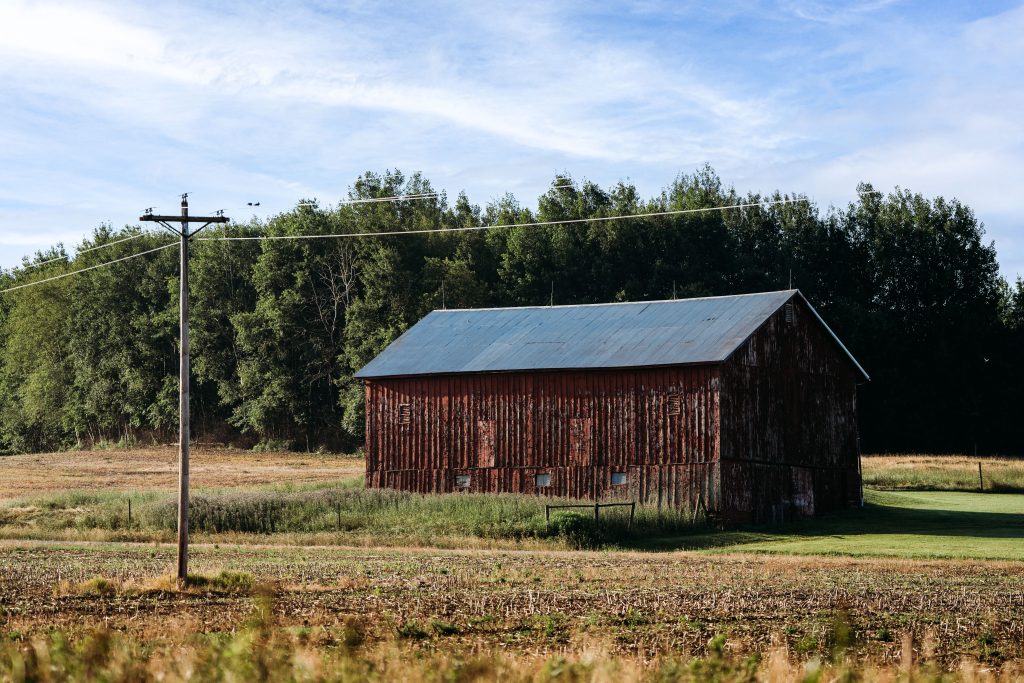
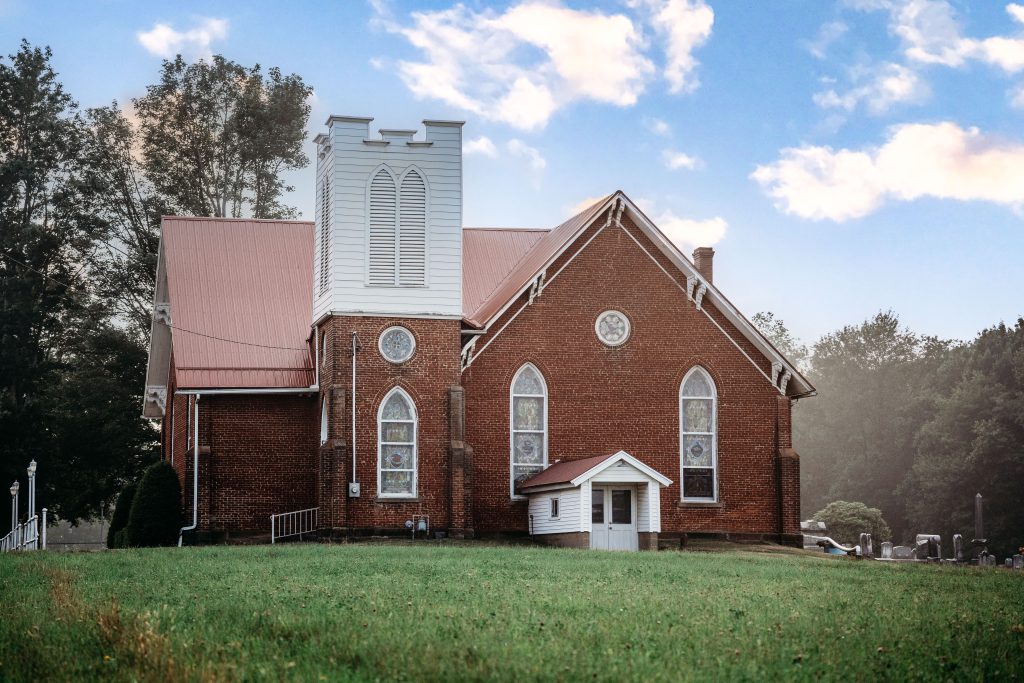
This sidelining of the small-town church in favor of an easy-going membership shows a truncated imagination for the influence of local congregations as repositories of local memory and bastions of clear-eyed hope. In many rural communities, the only institutions left to bring people together and keep memories of the community alive are local schools and local churches—and the schools usually leave before the churches. To downplay one or both of these repositories of local memory is to cut against some of the last ties that bind in rural areas.
Getting Caught Up in God's Great Salvaging Project
In the case of churches specifically, this kind of life-seasoned hope has a historic precedent. The entirety of the Christian story is a story of salvaging. What else can salvation be? It is the story that plays out from the beginning of Genesis—a story of complicity in evil and a story of hope breaking in. From Genesis 3 we face the curse—broken relationships with God, each other, creation, and ourselves—but we also face the hope that the seed of the woman would crush the head of the enemy. When that Hope comes down—incarnate, with meat on—He comes down in a small place at a specific time in a family with a vocation. The story of the incarnation is the story of God’s great salvaging project, and it starts with Jesus attending well to what his father is doing in a specific place and time.
I would argue that the first step toward eliminating the waste of places, things, and people is embracing the salvaging attentiveness and courage of the One who modeled attentiveness from the beginning. And the local church is well positioned to help us do this.
This is not an appeal to a pie-in-the-sky-when-we-die other worldliness; rather, it is an appeal to get to work where our feet are, to get the dust of our Galilees on our feet and the splinters of our trades in our fingers just as Jesus did. It is an appeal to look at the wreckage of the modern world and think like Virgil Feltner, “we can make it tight.”
Of course, good theology knows we can’t do this on our own. Thankfully, we don’t have to. Once again, Hopkins proves a helpful guide. The same God who has charged this world with his grandeur also sustains it.
And for all this, nature is never spent;...
Because the Holy Ghost over the bent
World broods with warm breast and with ah! bright wings.[17]
[1] “God’s Grandeur | The Poetry Foundation,” accessed January 29, 2025, https://www.poetryfoundation.org/poems/44395/gods-grandeur.
[2] Wendell Berry, What Are People For? (Berkeley, CA: Counterpoint, 1990).
[3] Berry, What Are People For?, 126.
[4] Berry, What Are People For?, 127.
[5] Berry, What Are People For?, 128.
[6] Berry, “The Work of Local Culture,” 153.
[7] Berry, “The Work of Local Culture,” 154.
[8] Berry, “The Work of Local Culture,” 155.
[9] Berry, “The Work of Local Culture,” 156-157.
[10] Berry, “The Work of Local Culture,” 162.
[11] Patrick J. Carr and Maria J. Kefalas, Hollowing Out the Middle: The Rural Brain Drain and What It Means for America (Boston: Beacon Press, 2009).
[12] Carr and Kefalas, Hollowing Out the Middle, 24.
[13] Berry, “The Work of Local Culture,” 157, 167.
[14] Wendell Berry, Hannah Coulter (Berkeley, CA: Counterpoint, 2004), 34.
[15] Berry, Hannah Coulter, 71.
[16] Berry, Hannah Coulter, 71.
[17] “God’s Grandeur | The Poetry Foundation.
NOTE: All photos copyrighted Center for Rural Ministry, 2025.

Charles E. Cotherman is executive director of the Center for Rural Ministry and an assistant professor of Biblical and Religious Studies at Grove City College. He is also a pastor at Oil City Vineyard, a church he and his wife Aimee had the privilege of planting in 2016. He has written on rural ministry, church planting, and history for a variety of publications including Evangelicals, Modern Reformation, Front Porch Republic, and Plough. He is the author of To Think Christianly (IVP Academic) and a contributing editor of Sent to Flourish: Guide to Planting and Multiplying Churches (IVP Academic). He is currently working on a book on entitled Strip Mine Jesus: Hope for the Rural Church, Small Towns, and Overlooked Places (Baker, forthcoming in 2026). He lives with his wife, four children, and a spoiled cat and dog in Oil City, Pennsylvania. Charlie can be reached at charlie@ruralministry.org

