

In October of 2015 I spent a week at Regent College in Vancouver, Canada. I was three and a half years into a PhD program at the University of Virginia, and I was at Regent to conduct archival research for the project that would eventually become To Think Christianly: A History of L’Abri, Regent College, and the Christian Study Center Movement. It was a heady trip—whole days in the archives examining the James M. Houston Fonds, oral history interviews with some of the founders of Regent, tea with Houston, and, of course, breath taking views of Vancouver.
I knew I was only going to have a few days in the archives, so I was zoned in. I worked with very few breaks trying to absorb as much as I could as fast as I could.
I can’t remember exactly why I took time away from the archives to attend a chapel service that took place during my time there. Looking back, it very well may have been the prompting of the Holy Spirit. What I know for sure is that I had no idea that the sermon I was about to hear would change my life.
“Your Sermon Is Too Good”
The speaker that day was a pastor I had never heard of named Matt Canlis. His sermon that morning was basically a testimony about how God had used Eugene Peterson (Canlis’s prof. during his time at Regent) to help a hard-charging ministerial candidate learn to slow down, to minister at God’s speed rather than at the speed of American society.
Peterson suggested that Canlis consider moving to Scotland and taking up life in a parish—not a parish like we have in America, where the idea is largely divorced from geography, but a parish outlined by specific roads and rivers, a parish anchored in a place.

I distinctly remember Canlis describing how he learned that he needed to walk the parish rather than spend time in his pastoral office. (Actually, on his first assignment as a pastoral assistant, he discovered, much to his surprise, that neither he nor the pastor in charge had an office.) He talked about the need to know and be known by the people in a place.
To illustrate the point, he recalled a Sunday when he preached what he thought was a very good sermon--potentially a great sermon. He was practically glowing afterward until a Scottish mentor told him the sermon was good, a bit too good. The older pastor asked him how much time he had spent in the parish that week. The implication was clear—the work of a pastor is not defined by presenting a shiny, well polished sermon each week; rather, it is defined by loving people and communicating the truth of the Gospel in daily life just as much as in Sunday worship.
Taking the Lesson with Me
When I left Vancouver a couple days later, I returned home with more than research on my mind. Canlis’s sermon stayed with me. The idea that a sermon could be too good was something I had never considered. I mulled it over. Then I put Canlis’s words into practice.
Since 2014, my wife and I had sensed a call to plant a church in the corner of western Pennsylvania we had always called home. This call was alive in my mind in the fall of 2015 when I was at Regent, and the call would become a reality less than a year later when we left Charlottesville, Virginia to plant a church in Oil City, Pennsylvania in the summer of 2016.
Oil City Vineyard church started with eight adults and six kids in our living room that August. Our numbers grew over the course of the fall, and we moved to a public space in October. With Canlis’s words still ringing in my ears, I walked the streets, tried to know my neighbors, and thought a lot about how I ordered my time. I couldn’t shake his comments about how much time should be devoted to sermon prep. From the beginning, I worked to keep my sermon preparation and writing to roughly four hours a week.
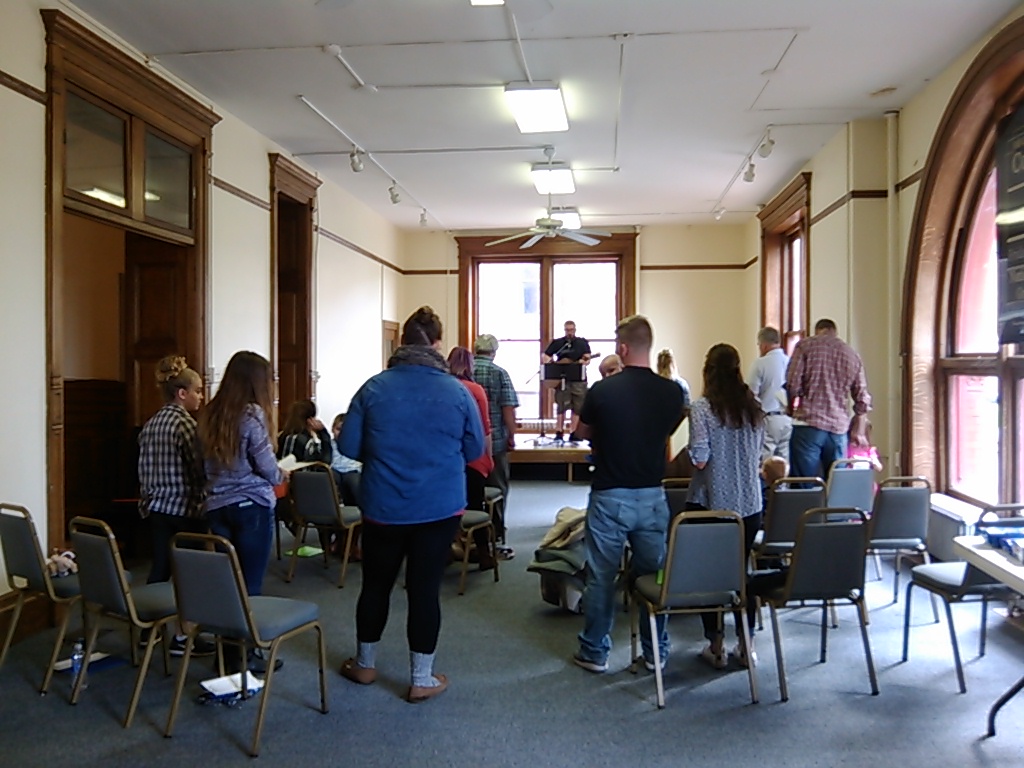
This was a conscious decision in the early days because, as a church planter with a congregation of 15-20 folks, I simply didn’t have a lot of pastoral care or administrative work to do. I could have spent much more time prepping sermons during this season.
I’m glad I didn’t. I’m grateful God got to me first through Canlis’s sermon.
For the last eight years I have attempted to keep my sermon preparation and writing to roughly four hours each week. Some weeks (and some topics) require more time, more research. Some weeks require less. Of course, I roll the sermon over in my mind as I drive, as I pray, as I get breakfast in the morning. The call to convey the goodness of God is a high call, and it is a call I don’t take lightly. But my call to love my neighbor, to be out in the community, to be a good husband and father are equally high callings. Canlis’s sermon helped put this in perspective for me all those years ago. It was a sermon that continues to shape my ministry today. Seasons of life and work may shift, but the call to know and be known by one’s neighbors, just like Christ’s call to love our neighbors as ourselves, never changes.
One More Thing…
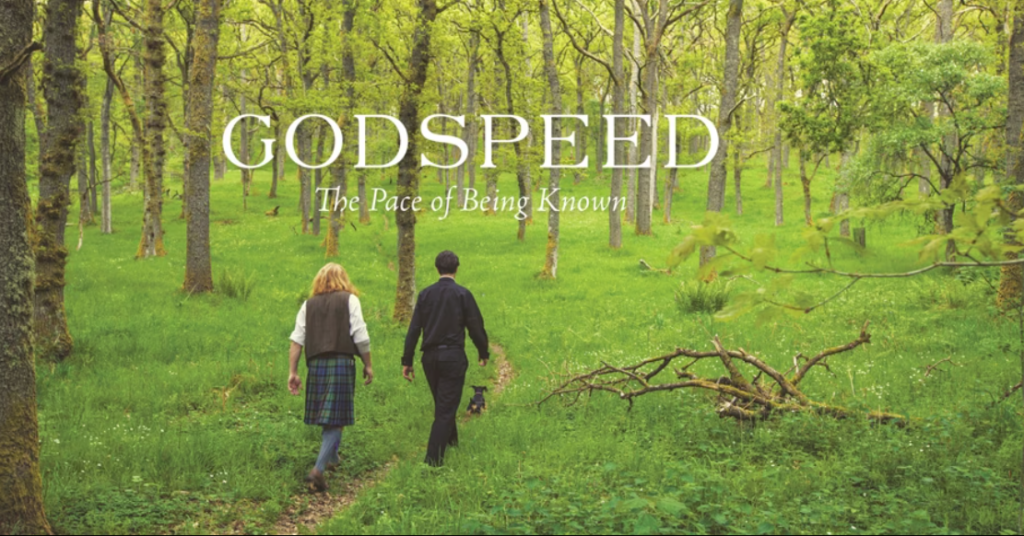
It had been nearly ten years since I had heard Canlis speak, and I had largely forgotten the actual sermon—though I had continued to implement what I took from it, almost as if the lesson learned outlived the voice of the teacher. Then, a couple weeks ago, one of my mentors sent me a video called Godspeed. I had forgotten Canlis’s name, but as the video played I recognized the story. It is a story as powerful today as when I first heard it.
Here’s the video, and here’s to living in your own fishbowl at God’s speed.

Charles E. Cotherman is executive director of the Center for Rural Ministry and an assistant professor of Biblical and Religious Studies at Grove City College. He is also a pastor at Oil City Vineyard, a church he and his wife Aimee had the privilege of planting in 2016. He has written on rural ministry, church planting, and history for a variety of publications including Evangelicals, Modern Reformation, Front Porch Republic, and Plough. He is the author of To Think Christianly (IVP Academic) and a contributing editor of Sent to Flourish: Guide to Planting and Multiplying Churches (IVP Academic). He is currently working on a book on rural ministry and small-town flourishing entitled Strip Mine Jesus (Baker). He lives with his wife, four children, and a spoiled cat and dog in Oil City, Pennsylvania. Charlie can be reached at charlie@ruralministry.org

