
I don’t know how long pastors have had to argue for the validity of small churches.
Perhaps an emphasis on size comes easy to Americans simply because of our expansive national geography. As historian Sydney Mead once noted, in America space supplanted the influence time had long exerted on European religious life.[1] Or maybe the roots of our emphasis on size and numbers can be traced back to George Whitefield, who, in addition to being America’s first self-made celebrity, also set a precedent for watching (and possibly exaggerating) the numbers when it came to his listeners and converts? Maybe the cause wasn’t religious at all. Maybe it had ties to industrialization and economic policies that drove production and the desire for ever increasing profits? (Or maybe we can just blame Texas? Everything is bigger there.)
An Argument in the Opposite Direction
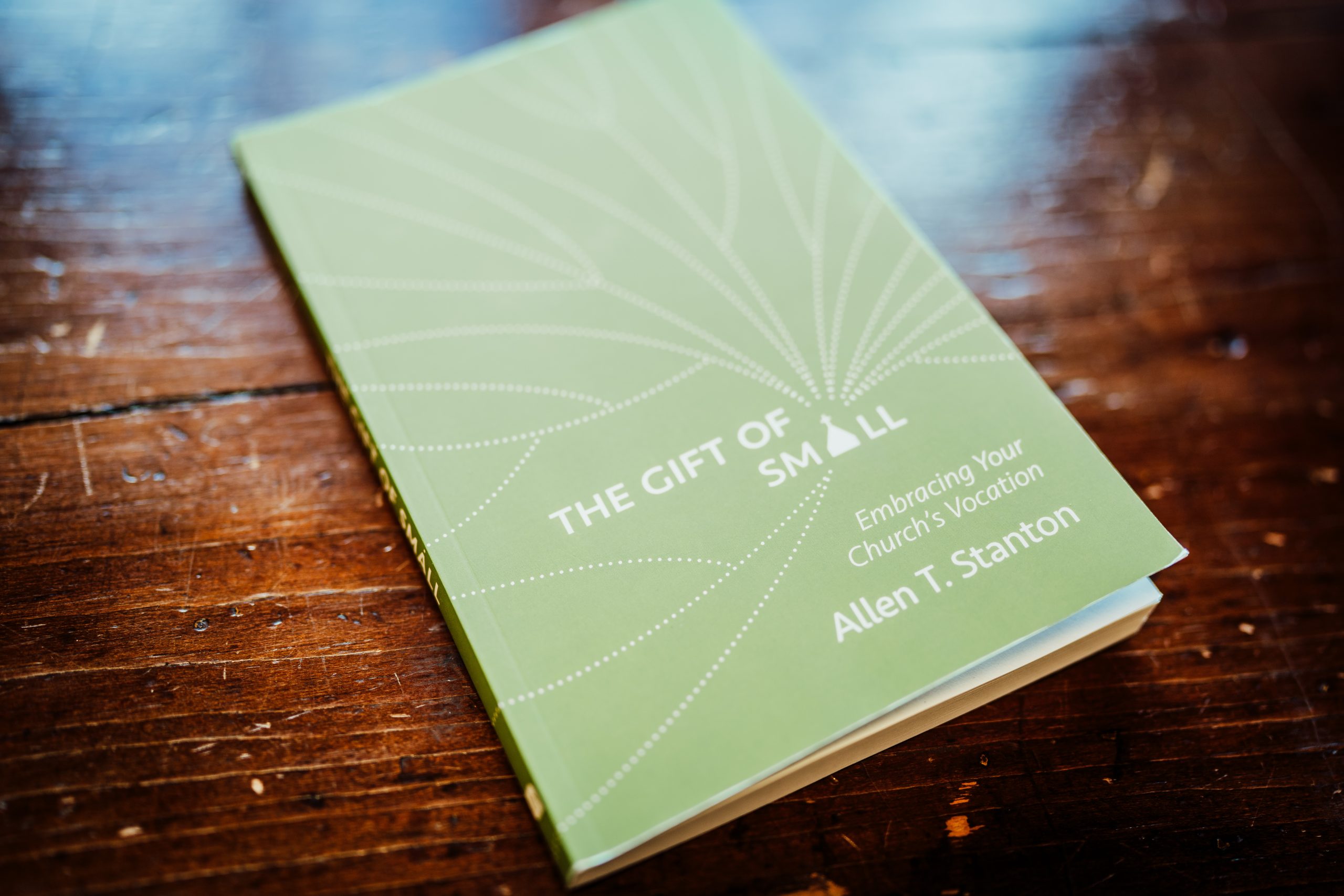
Allen T. Stanton’s recent book The Gift of Small: Embracing Your Church’s Vocation (Fortress Press, 2024) is a call to face the ramifications of our warped moral imagination that denotes positive connotations on words like "big" and "growing" while affording inverse value on things deemed "small" or "stable." “We are,” as Stanton notes in the first sentence of his opening chapter, “a people obsessed with growth, especially numerical growth” (11). And while, in Stanton’s telling, this reality may have close ties to “our economic worldview,” the fact is that all but the most rigorous of small-church and rural church advocates, tend to accept the same metrics for assessing the health of churches and ministries (15). “Bloggers and church leadership websites regularly publish lists of the fastest-growing congregations” while “denominational leaders tout helping churches grow as their primary goals” (11).
The Gift of Small is an argument in the opposite direction—a call to see the unique vocation of small-membership churches as a valuable avenue by which disciples are formed and God’s kingdom breaks in.
A Small-Church Sequel
The Gift of Small builds on some of the themes Stanton introduced three years prior in his first book, Reclaiming Rural: Building Thriving Rural Congregations (Rowman & Littlefield, 2021), which we reviewed here. In this second offering, the pastor and author tackles not only small, rural churches, but small churches wherever they may be found.
By tapping into the recently released National Congregations Study, Stanton reminds his readers that the average congregation size in America is around 70 people. This is not the average small congregation. This is the average congregation across all churches in America. Furthermore, churches designated as small make up about 91% of all churches in America. (Yes, you read that right.) And about half of all American church goers attend one of these churches (79).[2]
Small churches are the norm.
And, according to Stanton, this is a good thing—a gift.
How Is Small a Gift?
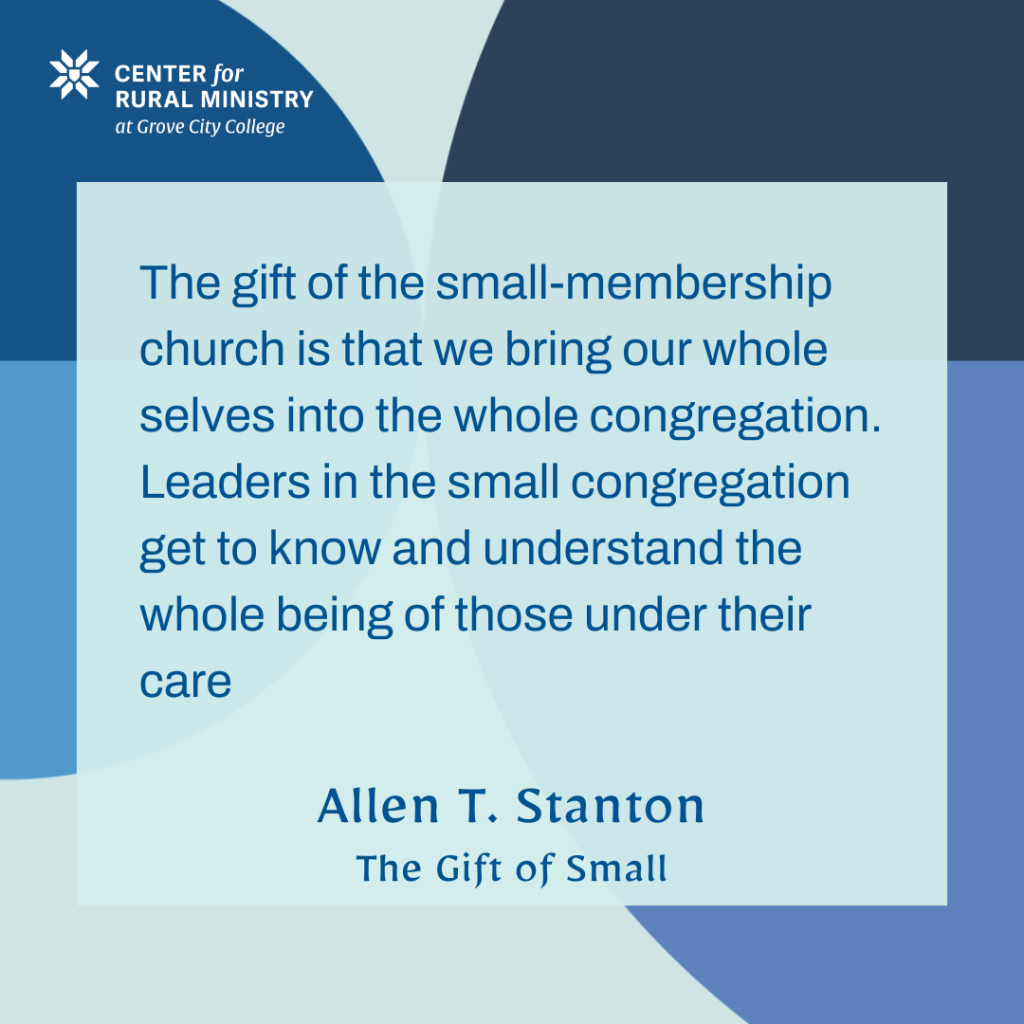
But how precisely is small a gift? Stanton spends the rest of the book fleshing out this assertion. He demonstrates that small-member churches create space for relationships that are multifaceted and holistic. Contrary to the advice of some in the church-growth movement who explicitly question the value of pastoral availability and pastoral care, Stanton follows congregational studies researcher Carl Dudley in advocating for pastors to specialize in loving the members of their congregations. In these small, relational spaces, Stanton sees an opportunity to be both formed in one’s faith and known as a person: “The gift of the small-membership church is that we bring our whole selves into the whole congregation. Leaders in the small congregation get to know and understand the whole being of those under their care” (47).
Stanton also argues—against the grain of common perception—that small-membership churches are surprisingly nimble. Sure, he admits, sometimes traditionalism and a “we’ve-always-done-it-this-way” mindset prevail. But this isn’t the only story to be told. Small churches, by virtue of close relationships and relatively flat leadership structures, “can be surprisingly nimble, responding to needs and opportunities with alarming speed” (58). As Stanton points out, sometimes this speed comes through unofficial channels like parking lot meetings. While these meetings can be interpreted cynically as opportunities for passive-aggressive power moves, Stanton's reframing shows that they are also opportunities for small churches to lean into relationship and nimbleness. It is a perspective worth considering.
The People of the Small Church
If there is a less compelling section in a generally quite compelling book, it may be the book’s middle section. Stanton makes a case, again based on the National Church Study as well as his own interviews, that “half of all church goers are intentionally choosing to be in their smaller congregations” (85). I can’t help but wonder if this is right. It seems to me that, while many of those who attend small churches genuinely do desire “simpler, more authentic, more personal” congregations, it is likely that a decent percentage of those who attend small churches—especially in extremely rural areas—don’t have many other options. It is a small church or no church, so they choose a small church out of conviction, necessity, or both. The good news, as Stanton's entire book demonstrates, is that what they get, even if they find themselves in a small church by a kind of necessity, can be a true gift.
In the next chapter, Stanton makes a strong case for expanding our efforts to integrate older congregants, who in most cases possess great quantities of “experience,” “more volunteer hours to spend,” and “higher disposable incomes and less debt” (97-98). This is an emphasis that a few others in the rural ministry conversation have been making recently. Most notably, Carl Greene's book Recognizing Rural Ministry, which we reviewed in 2023, is largely centered around similar themes related to engaging retirees in rural communities.
At one point in Stanton's chapter on small, aging congregations, he asks why “we are obsessed with having a young congregation” (95). Barring the obvious answer (i.e., the church’s future), which Stanton names, I think he may miss an opportunity to talk about the juvenilizing of the church at this point.[3] American church culture has been emphasizing youth since at least the Jesus Movement of the late 1960s and early 1970s, but in recent years the advent of worship videos on YouTube and other forms of media driven by youth culture at large suburban churches has given churches everywhere a new sense of what worship should look like.[4] This over-emphasis on youth can be alienating to older congregants and hard to replicate in most small churches.
The Vocation of the Small Church
The word vocation comes from the Latin word for call, so when we talk about an individual’s vocation or a church’s vocation, we are necessarily talking about a call from God. The connection is unavoidable. To be called, there must be a caller. So what work is God calling small churches to? What is the vocation of the small church?
The first point Stanton makes in the third section of his book is that some are wont to dismiss small churches as “inactive or sleepy” because the programming on offer at the small church seems to be primarily relegated to Sunday mornings. The perception is that a happening church is a seven-day-a-week church.
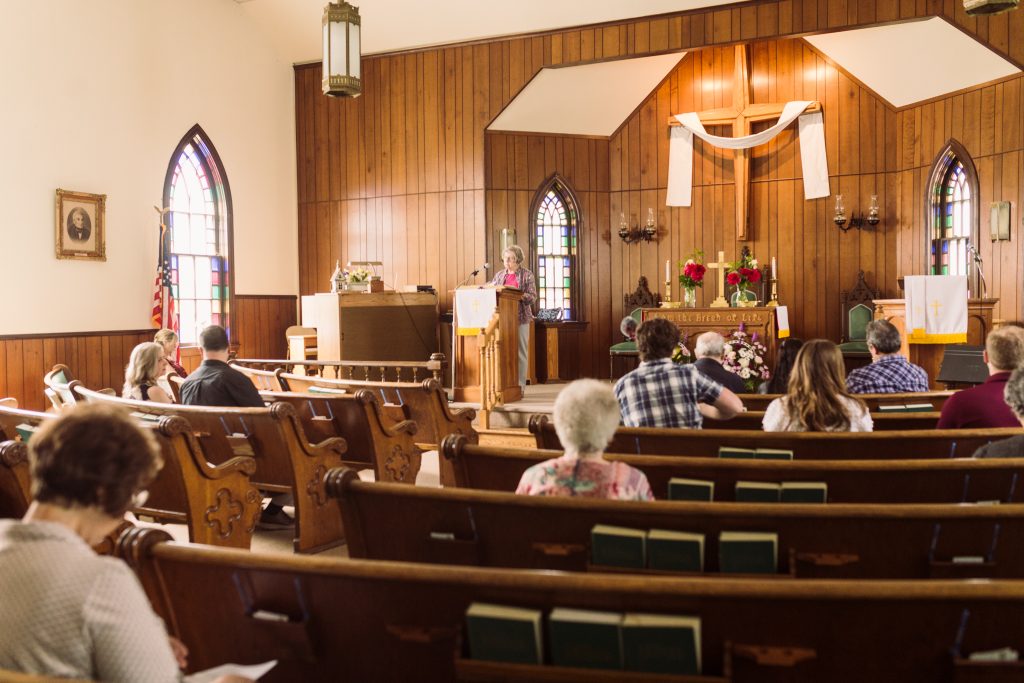
Of course, God’s people are called to be the church seven-days-a-week. This does not entail, however, that the church has programming at the church building every day. Here Stanton harnesses some important research on the difference between “regular volunteers” who serve on a consistent basis and "episodic volunteers” who serve occasionally. Small churches rely on regular volunteers, who can take on more technical roles because of their experience but are also more prone to burnout. Episodic volunteers, on the other hand, are more idealistic, more inclined to self-report higher levels of impact, and are often given more basic tasks (117). Stanton makes a forceful case that need in small membership churches is for pastors who can “help members bridge the connection between the ongoing work in the church and their spiritual formation” (120).
A second aspect of Stanton’s argument about vocation touches on the multifaceted opportunities small churches provide their members. In a smaller church, the opportunities to serve through the cultivation of multiple vocations and skill sets abound. “The small-membership church,” notes Stanton, “does not require a certain set of credentials to lead in a new area; in most cases, it simply requires showing up” (133). This means that there will be surprises--like janitors who also handle accounting and accountants who practice preaching (133). These are the unique opportunities for holistic formation and working out one’s vocation in community that small churches across the country and across the globe provide.
A Gift Worth Celebrating
The Gift of Small stands—like the congregations it celebrates—as a counter narrative to the “myth of unfettered growth as normative that has taken root in our imaginations” (143). Small churches are not a problem to be solved or a throwback to be cast aside. The are a meaningful part of God’s plan to bring the goodness of his kingdom to every corner of creation. Small congregations can embrace their vocations with humble confidence because they are a gift to the world—as is a book like this that celebrates the unique and enduring contributions these small church provide.
[1] Sidney Earl Mead, The Lively Experiment: The Shaping of Christianity in America (New York: Harper and Row, 1963), 5-6.
[2] If you are wondering where the other half of American church goers can be found, the answer is that they can be found in the 9% of churches deemed midsized or large.
[3] See, Thomas E. Bergler, The Juvenilization of American Christianity (Grand Rapids, MI: Eerdmans, 2012).
[4] Larry Eskridge. God’s Forever Family: The Jesus People Movement in America (New York: Oxford, 2013).

Charles E. Cotherman is executive director of the Center for Rural Ministry and an assistant professor of Biblical and Religious Studies at Grove City College. He is also a pastor at Oil City Vineyard, a church he and his wife Aimee had the privilege of planting in 2016. He has written on rural ministry, church planting, and history for a variety of publications including Evangelicals, Modern Reformation, Front Porch Republic, and Plough. He is the author of To Think Christianly (IVP Academic) and a contributing editor of Sent to Flourish: Guide to Planting and Multiplying Churches (IVP Academic). He is currently working on a book on rural ministry and small-town flourishing entitled Strip Mine Jesus (Baker). He lives with his wife, four children, and a spoiled cat and dog in Oil City, Pennsylvania. Charlie can be reached at charlie@ruralministry.org

